Sunday, 17 June 2012

Mummified human remains found in Ming Dynasty tomb


Image: Wei Yonggang/ChinaFotoPress/PA
ARCHAEOLOGISTS HAVE discovered mummified human remains in a royal tomb belonging to the Ming dynasty.
The well-preserved body of a man was found during excavations of the site in Nanchang city in Jiangxi Province earlier this week. He is believed to be a royal descendant.
The Ming Dynasty ruled from 1368 to 1644 and had its capital in Beijing. The dynasty was the last ruled by ethnic Han Chinese and was replaced by the Shun Dynasty after the fall of Beijing during a rebellion. During its rule, the Ming Dynasty oversaw the construction of part of the Great Wall.
Royal Tomb
  • A mummy is seen at a Ming dynasty royal tomb on June 12, 2012. (Photo by Wei Yonggang/ChinaFotoPress/PA)

Wednesday, 13 June 2012

Chipped Chinese bowl bought for just £65 sells for £1.6 million


A small, chipped bowl that was bought for just £65 has stunned the art world after it sold for over £1.6 million pounds at auction.

Chinese bowl that sold for over 1.6 million pounds at Bainbridge's in Ruislip, Middlesex
The 10 inch diamter dice bowl was a 15th century Ming dynsaty piece of porcelain and exceptionally rare Photo: BNPS
The 10 inch diameter dice bowl was a 15th century Ming dynasty piece of porcelain and exceptionally rare.
It was bought by renowned collectors Otto and Gertrude Harriman after World War II when £65 and would have been worth £1,600 in today's money.
The family of the late couple decided to sell it at auction with an estimate of £20,000.
But Chinese bidders went into a frenzy over the blue and white bowl and it went for 84 times that amount at £1.68 million.
And according to experts it would have sold for even more had it not been damaged and chipped on the rim.
It was sold by Bainbridge's auction house in Ruislip, Middlesex – the same saleroom that famously sold a Chinese vase in 2010 for £59 million.
As well as the bowl, a simple looking four inch wide saucer estimated at £600 went under the hammer for £75,000.
The grey-green item dated back to the Song dynasty between 960 to 1279.
A second bowl, also from the Ming dynasty, sold for £850,000 – well above its £60,000 estimate.
The Harrimans – who were from Austro-Hungry but moved to London before the war – acquired a fine collection of Chinese art, part of which was declared as being of national importance.
After the death of Mrs Harriman in 1970, the collection lent to the Nottingham Castle Museum where it has been ever since until the family decided to auction part of it.
The star lot was the blue and white bowl that would have been used in dice games.
It is dated from the Xuande Emperor of the Ming dynasty who ruled between 1425 and 1435.
It was decorated with five-claw dragons among cloud scrolls and was one of 30 lots that went for over three million pounds in total.
Peter Bainbridge, who runs the saleroom, said the bowl was as rare as "hen's teeth".
He said: "This bowl was part of a collection that was put together by Otto and Gertrude Harriman.
"It was a dice bowl used for games, but you wouldn't have shaken it, you would have just rolled the dice in.
"It had a dragon relief on it and is exceptionally rare, and would have been more valuable had there not been some damage.
"It came from an intimate collection that was passed down from the Harrimans and has been on display in Nottingham.
"It was a collection of national importance and when the side of the family that had it died recently it was time to sell.
"The Harrimans bought the bowl from Bluett's in 1948 for £65 and Bluetts had bought it from a General Haughton in 1948 for 25 pounds.
"It has now gone back to China, and it just shows that the market is still very good for the right pieces."

Source: The Telegraph

Horse & Rider - From Homer to Genghis Khan


Horse & Rider - From Homer to Genghis Khan

In the world of the Greeks (1300 - 300 BC) and on the Mongolian steppe (600 - 1400 AD) 

Allard Pierson Museum, Amsterdam  16 May to 16 September 2012


Poster exhibition 'Horse & Rider'.The combined exhibition Horse & Rider - From Homer to Genghis Khan is presented in the Allard Pierson Museum from 16 May to 16 September 2012. The impact of horse and rider on the world of the Greeks and on Central Asia lies at the focus, with two different cultures coming under the microscope: a nomadic and once feared nation from the Asian steppe and a city-based and influential society centred on the Mediterranean that we know as the cradle of our current Western civilisation. These are two highly evocative cultures, with Homer and the Mongol Empire of Genghis Khan as iconic opening and closing points. By means of this combined exhibition the Allard Pierson Museum for the first time confronts and combines its own classical collection with finds from a period and region that are not normally covered.
The Greek part of the exhibition shows the rise and use of the horse as mount and status symbol roughly from the Troy described by Homer right up to Alexander the Great, between 1300 and 300 BC. The Mongolian part shows archaeological finds recently excavated from rock graves in Mongolia. These finds from the 7th to 14th centuries AD have been exceptionally well preserved. They include musical instruments, items of clothing, weapons and of course saddles and harnesses. During this period, owing to the introduction of the stirrup, the rise of the steppe peoples reached its apogee in 1206 with the founding of the Mongol Empire by Genghis Khan - one of the largest empires in world history. The exhibition depicts a society in which man and horse work together as a single unit. The exhibition Horse & Rider transports the viewer to two different worlds in which man and horse are inextricably bound up with each other.
To mark the exhibition, a catalogue of the Mongolian part is being published (17.95 euros) along with a special from AP Notifications by the Association of the Friends of the Allard Pierson Museum (6.50 euros). In addition, there is a wide range of associated events, including lectures, guided tours, study days and workshops. Visitors - young and old - will be able to imagine themselves as true inhabitants of the Mongolian steppe in a fully equipped yurt, or traditional nomad tent, complete with appropriate clothing. The Mongolia of today as source of inspiration can be seen in Blue Sky, a selection of photographs and artwork by Matthea van Staden and Jeroen Toirkens.
More than 200 museum artefacts will be presented against a backdrop of life-size antique mosaics and Mongolian steppe landscapes, with 100 of them on loan from the Academy of Sciences of Mongolia. The arresting exhibition design , rich in texture and tangibility , is by Theo Braams. The exhibition has been made possible with the assistance of the LVR LandesMuseum in Bonn, the Bundesministerium für Bildung und Forschung (German Ministry for Education and Research) and the Gerda Henkel Foundation.
There is an additional charge of € 3 throughout the Horse & Rider exhibition, period (16 May to 16 September 2012).

For further information/images contact Katja Vermeulen, Communications & PR Allard Pierson Museum, 020-5252555/56,c.m.a.vermeulen@uva.nl
A review copy of the 96-page, richly illustrated publication (ISBN 9789040007439) is available from WBOOKS, 038 4673400,sales@wbooks.com
Horse & Rider - From Homer to Genghis Khan (16 May to 16 September 2012)
Allard Pierson Museum, Oude Turfmarkt 127, Amsterdam, www.allardpiersonmuseum.nl

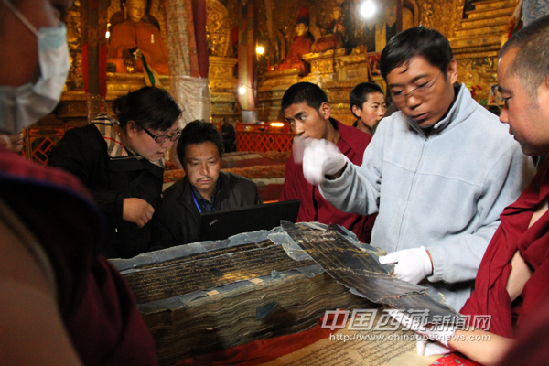
Centuries-old scripture found in Tibet


Cultural specialists in southwest China's Tibet autonomous region have found more than 100 pages of Tibetan scripture that dates back to the 13th century, local authorities said Wednesday.
Centuries-old scripture found in Tibet
Centuries-old scripture found in Tibet.[ Photo / Chinatibetnews.com ]
The document, whose content covers traditional Tibetan medicine and religion, was found at a monastery in Nyemo county on the outskirts of Lhasa last week, said Tashi Gyatso, an official with Lhasa's cultural bureau.
"The pages were loose and the document was incomplete," he said.
But the text, written in black ink and on quality Tibetan paper made of bark fiber, was still legible, he said.
Though the text was written in Tibetan, most of the pages were numbered with Chinese characters, the official said.
"The document was compiled during the Yuan Dynasty (1271-1368), almost800 years ago," said Pempa Tsering, a Lhasa-based specialist on ancient Tibetan literature.
Tashi Gyatso said the local cultural authorities are preparing to include the rare document on China's national list of endangered cultural heritage for special preservation.
The finding was among a total of 853 cultural heritage pieces uncovered in Lhasa over the past year, he said.
"The cultural bureau is making a list of the city's cultural heritage items between 2011 and 2015, in order to better preserve these valuables."
Source: China.org.cn

Tuesday, 12 June 2012

Terracotta acrobats found in Xi'an


Watch Video

The latest excavation at the Qin Shihuang mausoleum in Xi’an, the capital of northwest China’s Shaanxi province, has been underway since 2009. Scientists have recently released the latest findings, secrets that have been buried under the earth for thousands of years.
The pit covers an area of 600 square meters and excavation has been ongoing since last year. Unlike previous discoveries, the finds here are mostly of acrobatic figurines.
Archaeologist Zhang Weixing said, "These terracotta figurines are of the acrobats who performed in the imperial palace. During the Qin Dynasty, these people were called ’Bai Xi’. These terracotta figurines were mortuary objects."
During the Qin Dynasty two thousand years ago, "Bai Xi" artists often gave acrobatic and wrestling performances to the emperor. Revered for their strength, the performers were said to be able to shoulder tremendous weights upon their shoulders.
One stands more than two meters tall and sports a pair of gigantic feet. Scholars say this performer probably served as a sort of base - holding aloft team-mates during their performances. Unfortunately, most of the artifacts have been are badly damaged and some even burned.
Luckily, though, there’s still more to discover. Scientists have unearthed a number of additional and puzzling objects - including a bronze ball and a giant tripod. Archaeologists say that they have never seen such things before. It seems Xi’an continues to offer food for curiosity.

Sunday, 10 June 2012

New terracotta warriors unearthed

From Xinhuanet.com  June10, 2012

Photo taken on June 9, 2012 shows the newly unearthed terracotta warrior which was painted with colors at the No. 1 pit of the Museum of Qin Shihuang Terracotta Warriors and Horses in Xi'an, capital of northwest China's Shaanxi Province. Since the third excavation started in June of 2009, more than 100 terracotta warriors as well as terracotta horses and chariots have been unearthed at the No. 1 pit within the mausoleum complex of Qin Shihuang (259-210 BC), the founder of China's first unified feudal empire, the Qin Dynasty (221-206 BC). (Xinhua/Li Yibo) Archaeologists clean the newly unearthed terracotta warrior. Photo taken on June 9, 2012 shows the newly unearthed terracotta warrior which was painted with colors at the No. 1 pit of the Museum of Qin Shihuang Terracotta Warriors and Horses in Xi'an.


Archaeologists clean the newly unearthed terracotta warrior at the No.1 pit of the Museum of Terracotta Warriors and Horses of Qin Shihuang in Xi’an, Shaanxi Province, on Saturday.
Experts have found more terracotta warriors and wares in a new round of archaeological excavation at the Emperor Qin Shihuang's mausoleum, as well as evidence that the mausoleum was once set on fire, according to the site's management authority.
The Museum of the Terracotta Warriors and Horses of Emperor Qin Shihuang (259-210 BC) announced on Saturday that in the third round of excavation, archaeologists found more than 310 relics at the northern part of the No.1 pit, including 120 terracotta figurines and 12 horses.
Among the findings is a giant warrior that is 2.5 meters tall with a pair of 32-centimeter feet and a lacquered leather shield 60 centimeters long and 40 centimeters wide, twice the size of a bronze shield found in the 1980s in the No.1 pit.
New findings have shown that each terracotta figurine has its own facial expression.
In another finding, the terracotta armor on the figurine of a general had been produced more intricately than those of other figurines. Experts have found a large number of wares with well-preserved color paintings on them, and colors were also found on terracotta clothes, said Xu Weihong, an excavation team leader, the Xi'an-based Sanqin Daily reported.
"We first speculated that the colors on the relics would not be well preserved, but now we are finding lots of colorful paintings on the terracotta wares and lacquered wares," Xu said.
"Experts thought all the colors would fade, but so many colorful paintings were found," said archaeologist team leader Shen Maosheng.
Archaeologists found that the figurines in the passageways had been burned out of shape and some had even melted. They also discovered white ashes, caused by a high-temperature fire, proving that someone had deliberately set fire to the terracotta warriors, archaeologists said.
"The figurines were broken by humans, and the fire caused different degrees of damage to the figurines at different places," said Shen. Xiang Yu, a prominent military leader during the late Qin Dynasty (221-206 BC), is believed to be the one who ordered the mausoleum to be set on fire, Shen Maosheng said, an assertion most archaeologists agree with.
The new round of excavations started June 13, 2009, with authorities arranging for protective measures and exhibitions to be held continuously in the past three years. About 1.4 million visitors have visited and observed the excavation at the site.

Source: Globaltimes.cn June11,2012

Genetic and cultural power of the mongols


editorial Byamba2Prof.,Dr.Bayasakh.J .K,SFS,NUM
Mongolia and the Mongols have a tremendous history and have played a significant role in world history.Until recently,it was unclear how the Mongol race appeared in world history, where they came from, and where their homeland was in the pre-historical time period. How and when did they come to their present day territory, settle and become a homogeneous nation after having a thousand year confrontation with other Eurasian nationalities like Scythian, Avars, Sarmats, Kipchack, Hazars, Turks and others? Is the present day Mongolian territory the homeland of Kirgiz, Uighur and Turkic khanates? Is it a frontier of confrontation between the Turkic and Mongol origin nationalities? Who isthe real owner of that territory? What did the ancient Mongols look like? How are the present day Turkic nationalities different from each other? Did this change come from historical development and interactions? How did the Mongols survive the historical mixture and confrontations? Are the Mongols genetically stronger than the other races? Who was the main player of the region? There are many questions we face today as we look for the right answer.

ANCIENT MONGOLIAN HISTORY

The present day Mongolian territory was the arena of an active intercultural crossroads as it was used by many Eurasian nationalities subsisting on cattle breeding as their main economy which its vast land was suitable for. Many nationalities were to rise and fall on that land. The arid continental climate determined and dictated the method of survival as only animal husbandry or stock breeding was suitable as a way of life. The early medieval history of this land experienced the rise and fall of many nationalities. The Huns were the first big khanate, becoming an empire which went on to conquer part of Europe and drive many nationalities to consolidate and establish state hoods when confronted with Attila the Hun’s army. Attila was a danger to all of Europe and thanks to him, present day France, Germany, and Britain were established. Part of the Hun Empire entered the present day Russian southern frontier and inhabited the region. Other nationalities with different names such as the Scythians, Avars, Sarmats, Kipchacks and Hazarians have disappeared from history or assimilated with stronger nations like the Mongols.
It is well known that the Hun Empire has a nomadic origin and the Huns were a mongoloid type of race. The geneticists and anthropologists agree that the Mongols originated from the Huns by analyzing their DNA. The Hun Empire was proto-Mongol state. During that time, Asia and Europe were connected with each other by the Silk Road and cross culture activities between the two continents were established.
When the Hun Empire collapsed, the first world migration happened. Part of their brethren came to Europe through the Ural Mountain and settled in Central Europe, renamed as the Hungarians. The rest went on to live in the southern region of Russia and were known by ethnic namessuch as the Scythians, Sarmats, Avars, Kipchack, Hazarians.
During the following dynasties were established or risen several states in the territories of Eurasia the mongoloid nations were assimilated with the locals and disappeared from the world history. Only the million of the hazars live in Afghanistan. As we know the hazars were nomads and as well as settled people who worked in agriculture and have the sedentary life. The Kipchacks was under the Mongol rule during the Great Mongol State and they were good horseman and taught the Mongols how to herd the horses and how to make the permitted drink “airag” or” koumiss” (1, pp. ).
After the Hun Empire, the Sumbe (Syanbi) Khanate was established which is known by Chinese sources asSyanbi. They utilized the best aspects from previous Empire and also had intensive cross culture relations with other Eurasians,having some control over them. After this cultural group,the Mongolian territory saw the advent of the Nirun khanate, which is known as a Jujan by Chinese sources. The Persian historian, Rashid ad Din’s book termed them as“Darligin.” Mongolian scholar,G.Sukhbaatar, approved the Jujans as Darliginsin his brilliant research.A state named Nirun (p. 2) was created by them.With the collapse of that khanate, the territory of Mongolia saw several hundred years of non-Mongolian states rise to power, namely the Turks, Uighurs and Kyrgyzs. During these centuries, we saw a significant influence from the Turkic language, and also adopted Uighur letters from the Sogdo-Arameisof Iran. Many present day geographic names still have Turkic words which are hard to explain the meaning of. All of these khanates had the same main economy of animal husbandry and the nomadic way of life. This group had the same nutrition, dwellings, transport, clothes,and way of dressing and probably the mentality was nomadic. During recent years, archeologists found artifacts from that time-period which shows that during the existence of above-mentioned khanates, they had very intensive cross-culture relations similar to the Hun Empire of the Silk Road time-period. Archeologists founda large amount of golden coins and porcelain products, such as bowls, which were used during the Roman Empire and the Byzantine period. They also found an Egyptian pharaoh statue, a Tang statue of musicians and a dragon wall-drawing. In that time-period, Mongols had a huge influence on the outside world and had interactions with and borrowed some for their future development.

GREAT MONGOL EMPIRE AS THE CENTER OF CROSS CULTURAL ACTIVITY

The first mention of Mongols appears in the Chinese annals of ”Xin Tang shu” and “Jiu Tang shu” and are named “mengwu” and “menwa”. Later, in the 13th century, Mongols were named “menggusi”. In my book, I wrote about how the Chinese termed Mongol ethnic names in their historical sources. According my research, the ethnic name of the Mongols appeared around the eight and the ninth century. At the tenth century the “Khamag Mongol” khanate created a state, used until now. The meaning of that name has been explained by many scholars all over the world. The explanation I give it is like those who rise and grow up living near the” Mungunuul (Silver mountain)” with a suffix of plural of the Mongolian “l” and named like” Mongols”(1).The Mongols previously had power in the present day Eurasian territories and were influenced by other ethnicities’ names. But most of these ethnicities were pushed out from Mongolia and moved on to another place, searching a peaceful and quiet life.
Before the Khamag Mongol statehood was established, most parts of Mongolia were under the reign of the Kitan (Qidan) Liao Empire. They had two types of letters--one named as a small letter, another named as a big letter. Inner Mongolian scholar, Chingeltei, discovered within the small lettering several Mongolian words like gahai, tahia, nohoi, which means pig, chicken and dog. Among nine generals or ministries of the Great Khan’s cabinet, EluiChucai has a kitan origin and a wise minister who taught the Mongols how to use the taxation system among the Northern Chinese, who fell under the Mongol rule in the first half of the thirteenth century which increased the income for rulers etc. The successor of the kitans had a family name like Xiao or Hsiao and they lived among the Chinese of Mainland China and Taiwan. They were identified by a blue mark on their back when they were children which disappeared before age six or seven. That blue mark has been seen among Mongols, Koreans, Japanese and Hungarians and most of the northern Chinese. That is the genetic mark of those with a Mongol origin. When the successor of the Kitans came to Mongolia and listened to the faint sound of the horse head fiddle, they usually fell into the lyric’s sentiments and easily cried over it. The horse head fiddle is the traditional Mongolian instrument, registered by UNESCO as a world heritage item. The historical past tells us about the sentimental power of the music and melody. Nowadays, Mongols use this instrument’s melody to make a mother camel accept her baby camel if she hates or dislikes it. After hearing that instrument, the mother cameldrops down and accepts her baby. It’s an interesting and memorable event. You can observe it if you will go to a nomad family in Mongolia.
The main historical source of Mongolian medieval history is the Secret History of Mongols, written in 1240 by unknown author. The Mongolian original was lost while the Chinese character written version exists. The scholars from around the world are still researching it and trying to recover the Mongol origin. The Mongolian text was written into Chinese characters and translated into Chinese which was found by the Russian missionary,Kafarov, at the end of the nineteenth century in China. We have found three versions of this significant source written in the Chinese script. All the versions are different. This monument to time tells us about the origin of the Mongols before the birth of Chinggis (Genghis) khan and described well his previous 25 generations of genealogy. Scholars have recognized this monument as the main Mongolian source of history, ethnography, culture, literature and religion. In one word it is the main Mongolian written encyclopedia and all recognize it as a wonderful legacy to world civilization. It has already been translated into all the main languages of the world.
Except for the Secret History of Mongols, Mongols have also written some historical epics like “Jangar” and ”Geser”.
These two historical epics are also recognized as treasures of literature and studied by scholars all around the world. Jangar was popular among the western Mongols and story tellers retold over seven days and nights. It was written in classic Mongolian and the Tod Mongolian letter as well. Western Mongolians in China, Russia and Mongolia recognize it still as a main canon about their origins. In Xinjiang Autonomous Region of PRC there exist some temples dedicated to this epos of Jangar and Mongols within this region go to these temples to pray. Dozens of books are dedicated to this unique epos and have been published in many countries.
Mongolia in the thirteenth century was a center of the world development as well as a center of the cultural cross-road. The best architect and handicrafts were used in the construction of the capital of the Empire of Kharakhorum. Since the late 1940’s we have studying the archeological excavation of that colorful ruin.
As mentioned before, Mongolia grew from a nomadic civilization and I researched this topic. As I noted, the world civilization could be divided into two types: sedentary and nomadic. Two different forces hold them. Namely the centripetal force determines sedentary civilizationsas to why individualism and institutions are stronger there than in nomadic civilizations, in which the centrifugal force determines it to be less institutionalized with less attention paid to cultural or material heritage. Therefore sedentary civilizationshave preserved their materialistic culture better than the nomadic civilizations have (2, pp. 115-125).
With the collapse of imperial powers all over the world such as in Russia (1480), China (1368), Persia (1370-1372) and the rest of the world, the Mongols fell in stagnation and anarchy and lost their dominance. From the end of the seventeenth century until 1911, they became subjects of the Manchu Qing Dynasty. In that time period the Mongols lost their braveness and fell into the Lamaism sect of the Buddhism, spending more time praying and starting to deeply believe in reincarnation. With the adoption of Lamaism in Mongolia, the 1600’s saw the intellectual life of Mongols follow in their influence. Mongols learnt Sanskrit,the Tibetan written language and its historical literature. We became more religious and Mongolian books were burned during the reign of Ligdeng khan(mid the seventeenth century). The printing of Buddhist literature was developed. When Mongolia fell under the Manchu domination, we started to learn Manchurian, using it until 1911.The Manchus used the Mongolian classical letter as their state letter until their overthrow in 1911.During their domination, the Mongols learned Chinese and translated all the Chinese classics--including Confucian literature, Chinese poetry and novels like:”Jin Ping Mei”,” Hong loumeng”,” San guoyanyi” and” Shuihuzhuan” etc.
Our genesis came from the Huns (Xiongnu) and we have same DNA. The Mongoloid race came from the Mongols and spread into the Eurasia area. We had many centuries of ties with other Eurasians of which some of them still exist now or were assimilated with others during history. Mongolia is holder of the nomadic way of life, historically living in harmony with nature while confronting with sedentary civilizations. We took part in the ancient history of mankind and drove the creation of many states in both continents while leaving our trace on their histories. When Mongolia was a super power in medieval history, we drove Russians and Chinese to unite and helped them create their own statehood. We influenced the political life of many countries and contributed value totheir politics whilecreatingour own order under the Mongol rule and reign. Our geographical location lies in the middle of cross-cultural territory, constantly utilized as a cross road for different civilizations. Mongols historically were tolerant towards other religions and were never in the field of fighting over religion, having believedfor many millenniums in “Tenger” (sky) or heaven. Mongolia surprises the world with it rich archeological treasures. Mongolia offers a rich written monument and historical source.

From: UB Post

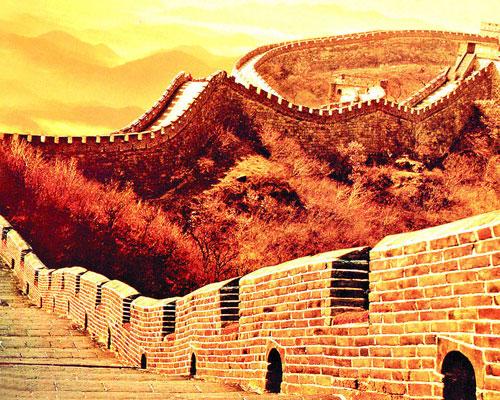
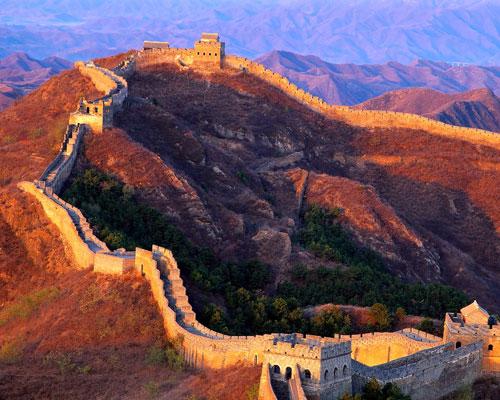
Precise length of Great Wall: 21,196.18 km


Watch Video

Play Video
Precisely, how long is the Great Wall? This has been a long-unanswered question, as many dynasties in Chinese history built, modified or extended the Great Wall. But now, the State Administration of Cultural Heritage has announced a definite number after a seven-year investigation.
Twenty-one thousand one hundred and ninety-six point one eight Kilometers (21,196.18 km), That is the precise length of the Great Wall, which was included as a World Heritage Site in 1987.
Twenty-one thousand one hundred and ninety-six point one eight
Kilometers (21,196.18 km), That is the precise length of the Great
Wall, which was included as a World Heritage Site in 1987.
Built over two thousand years ago, the Great Wall is one of the largest construction projects ever completed. It's a series of fortifications made of stone, brick, wood and other materials built across the historical northern borders to ward off invaders.
Although it is also called "wan Li Chang Cheng", which means ten-thousand li long wall in Chinese, this is only a description for a very, very long wall.
To get the precise length of the man-made masterpiece, the State Administration of Cultural Heritage began surveying the wall in 2006. More than 2,000 technicians worked on the comprehensive survey using state-of-the-art technology, in 15 provinces, municipalities and autonomous regions. The project proved to be very difficult as the Great Wall zigzags and winds up and down mountain edges and valleys.
Twenty-one thousand one hundred and ninety-six point one eight
Kilometers (21,196.18 km), That is the precise length of the
Great Wall, which was included as a World Heritage Site in 1987.
Twenty-one thousand one hundred and ninety-six point one eight
Kilometers (21,196.18 km), That is the precise length of the
Great Wall, which was included as a World Heritage Site in 1987.

Related stories

Source: CNNTV.cn

Tuesday, 5 June 2012

Chinese ancient books sell for $ 34.2 mln.


BEIJING, June 4 (Xinhua) -- Ancient Chinese books have been auctioned off for 216 million yuan (34.2 million U.S. dollars) in Beijing, the auction house said Monday night.
A collection of 1,292 ancient books from Guo Yunlou, a library belonging to the Guo family in Suzhou of east China's Jiangsu province, was sold to a private buyer at the 2012 Beijing Council Spring Auction on Monday night.
The auction began at 9:35 p.m. and started with a bidding price of 180 million yuan. A buyer finalized the bidding at the price of 188 million yuan. The total cost is 216 million yuan including commission fees.
The deal will be finally realized after the buyer pays all the expenses within the required period of time, according to the auction rules.
After six generations, in about 150 years of heritage since the reign of Emperor Daoguang in the Qing Dynasty (1820-1849), Guoyunlou's collection has reached more than 800 kinds including block-printed editions from the Song Dynasty (960-1279) and Yuan Dynasty (1271-1368), fine writing and old copies as well as inscriptions from the Ming Dynasty (1368-1644) and Qing Dynasty (1644-1911).
Three quarters of the Guoyunlou collection were bought by the Nanjing Library in early 1990s, while the remaining 1292 books of 179 titles are still kept by some private collectors.
The remaining 1,292 books were bought by a private buyer at an auction in 2005 at the price of 23.1 million yuan.
The encyclopedia of Splendid Valley of Flowers, the only existing and well-preserved copy handed down from the Song Dynasty, is the eye-catcher of the Guoyunlou collection.
Written in 40 books bound in 80 volumes, the encyclopedia is the world's largest Song edition. It has significant value in academic and history research as it has the content of some lost ancient books, said Fan Jingzhong, a professor from the China Academy of Art.