Wednesday, 27 May 2015

Call mummified remains 2.500 years old Altai Princess to be reburied

The Siberian Times  26 May 2015

Elders claim mummy's absence has caused natural disasters and send new petition to Kremlin after first snub from Putin.
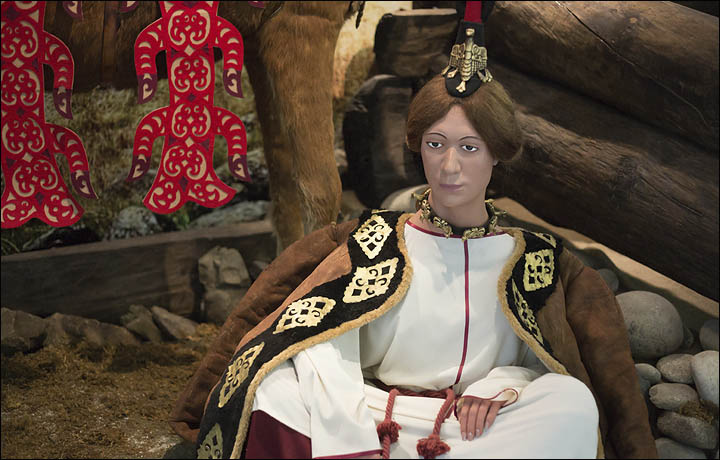
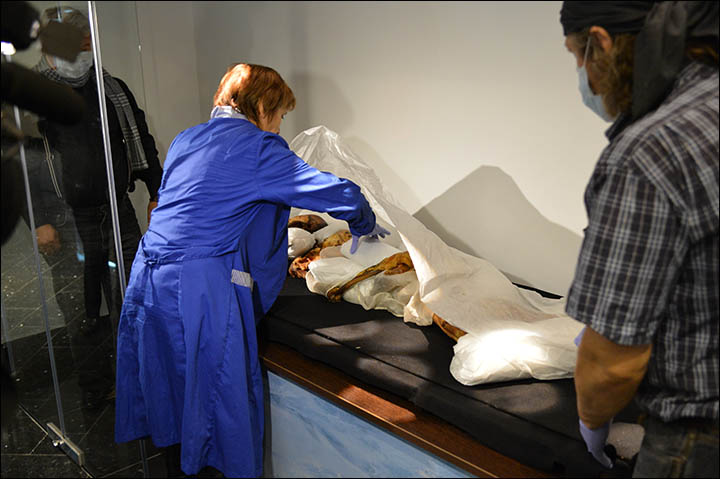
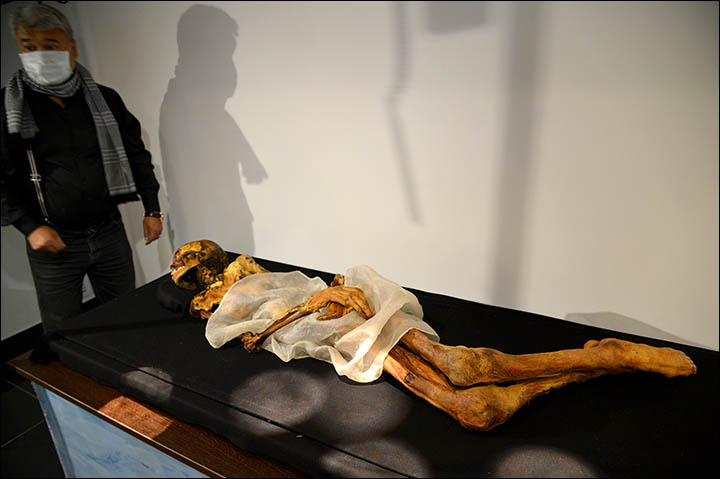
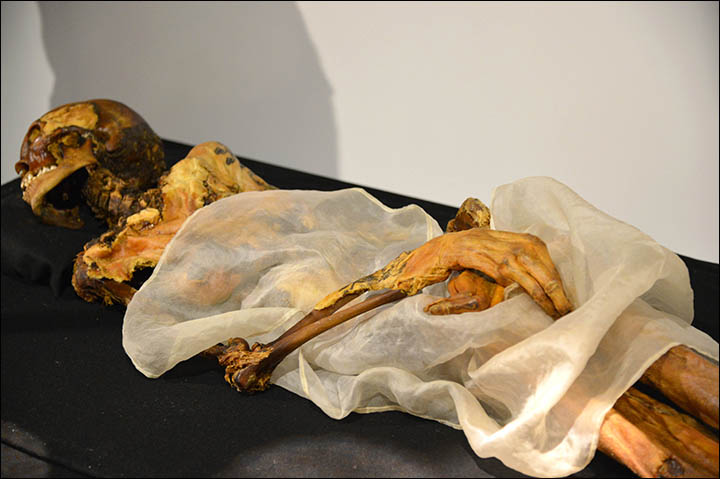
Thought to be about 25 years old when she died, she was found preserved in permafrost at an altitude of about 2,500 metres, with two men also discovered nearby. Picture: Vera Salnitskaya
Elders in the region where a tattooed princess was found preserved in permafrost have re-sent a petition to Vladimir Putin demanding she be immediately reinterred.
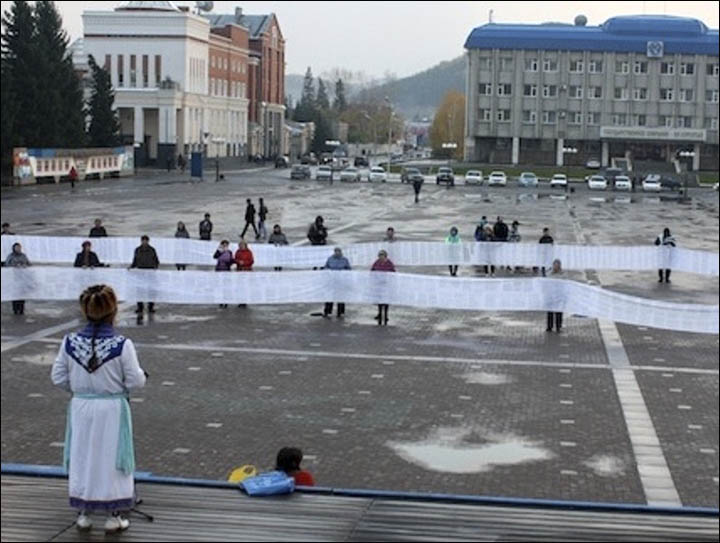
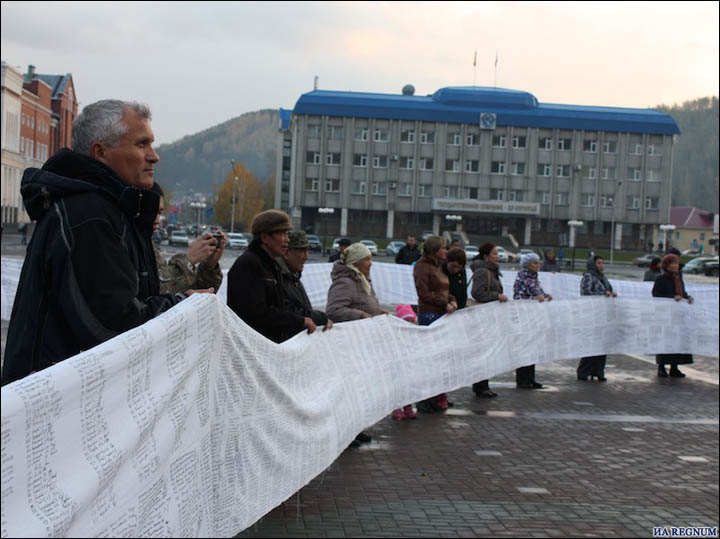
More than 22,000 people across the Altai Republic – 10 per cent of the population – signed a special 150-metre-long piece of canvas calling for the mummified remains put back in her final resting place.
They say that since her removal the area has been hit by a series of natural disasters and insist a reburial would 'stop her anger that caused floods and earthquakes'.
Ancient beliefs dictate that her presence in the burial chamber had been to 'bar the entrance to the kingdom of the dead'. Scientists say she lived more than 2,500 years ago, meaning she was alive five centuries before the birth of Christ.
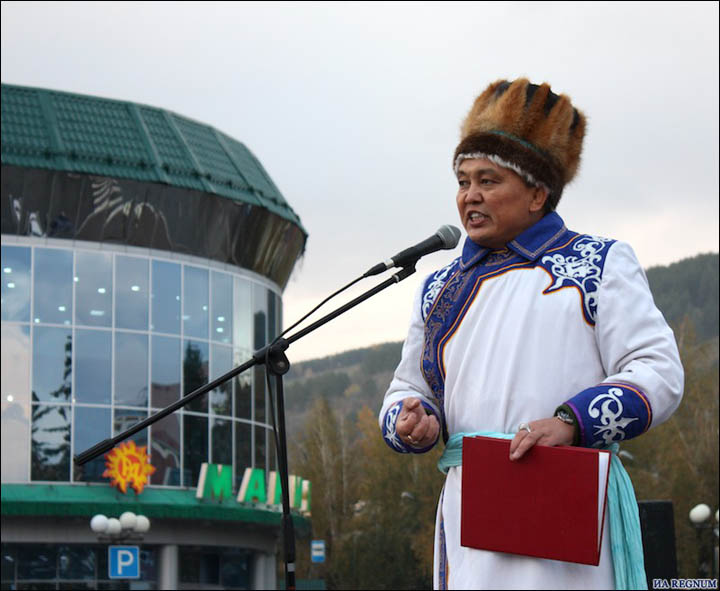
Ukok mummy to be buried

Ukok mummy to be buried

Ukok mummy to be buried
More than 22,000 people across the Altai Republic – 10 per cent of the population – signed a special 150-metre-long piece of canvas calling for the mummified remains put back in her final resting place. Pictures: IA Regnum
Akai Kine, the zaisan (leader) of the Teles ethnic group, and president of the Spiritual Centre of the Turks Kin Altai, had sent the petition to the Russian President last year but decided to reissue it after hearing nothing back from the Kremlin.
It is also being forwarded to the head of the Altai Republic Alexander Berdnikov and the leadership of the Russian Academy of Sciences.
He said: 'Residents of Altai Republic are asking Vladimir Putin to rebury the body of the princess according to human traditions, taking into account the interests of science, in the sarcophagus at the site of her original burial. 
'Scientists will still be able to extract the body of the mummy from the tomb, if it’s necessary to carry out any research.'
In their letter to Mr Putin, the elders claim that scientists have a positions of disrespect to the citizens of the republic and the indigenous population.
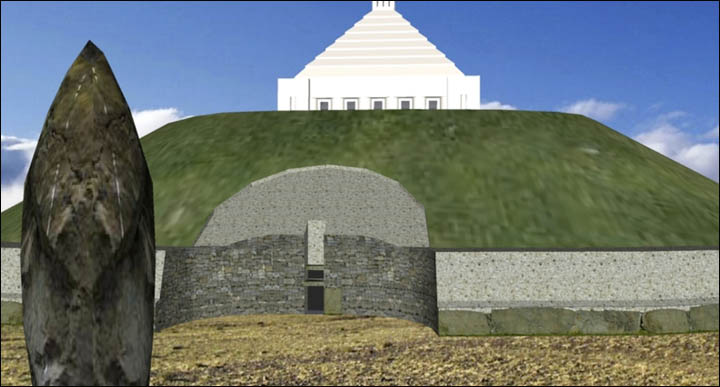
Mausoleum for Ukok princess

Ukok mummy mausoleum
'Residents of Altai Republic are asking Vladimir Putin to rebury the body of the princess according to human traditions, taking into account the interests of science, in the sarcophagus at the site of her original burial.' Pictures: Spiritual Centre of the Turks Kin Altai
They add: 'We, the people of the Republic of Altai, do not want to be like children standing beside the body of our mother, and dividing, whose mother she is more.'
The tattooed mummy was excavated by Novosibirsk scientist Natalia Polosmak in 1993 and was heralded as 'one of the most significant archaeological discoveries of the 20th century'.
Thought to be about 25 years old when she died, she was found preserved in permafrost at an altitude of about 2,500 metres, with two men also discovered nearby.
Known as Princess Ukok, buried around her were six horses, saddled and bridled and said to have been her spiritual escorts to the next world.
Archaeologists also found ornaments made from felt, wood, bronze and gold as well as a small container of cannabis and a stone plate on which coriander seeds were burned. From her clothes and possessions including a 'cosmetics bag', scientists were able to recreate her fashion and beauty secrets.
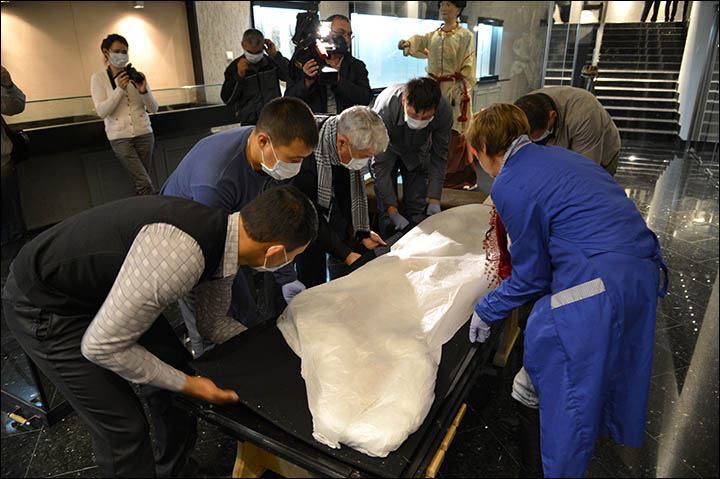
Tattoed 2,500 year old Siberian princess 'to be reburied to stop her posthumous anger which causes floods and earthquakes'

Tattoed 2,500 year old Siberian princess 'to be reburied to stop her posthumous anger which causes floods and earthquakes'

Tattoed 2,500 year old Siberian princess 'to be reburied to stop her posthumous anger which causes floods and earthquakes'

Tattoed 2,500 year old Siberian princess 'to be reburied to stop her posthumous anger which causes floods and earthquakes'
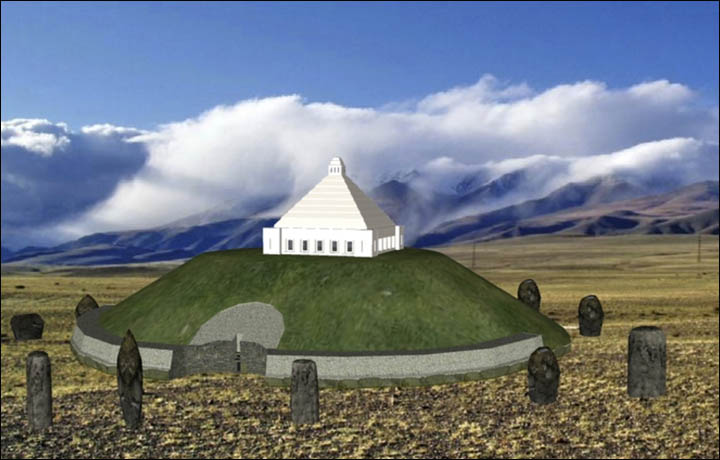
Once her body is finally returned to Altai, the local elders have plans to build a special mausoleum at her burial ground, on the pristine grasslands of the Ukok plateau. Pictures: Alexander Tyryshkin
Her head was completely shaved, and she wore a horse hair wig on top of which was a carving of a wooden deer. The princess's face and neck skin was not preserved, but the skin of her left arm survived.
But the most exciting discovery was her elaborate body art, which many observers said bore striking similarities to modern-day tattoos.
On her left shoulder was a fantastical mythological animal made up of a deer with a griffon’s beak and a Capricorn’s antlers. The antlers themselves were decorated with the heads of griffons.
The mouth of a spotted panther with a long tail could also be seen, and she had a deer’s head on her wrist.
Her remains spent most of the past two decades at a scientific institute in Novosibirsk, and are now at the Republican National Museum in Gorno-Altaisk. They have been treated by the same scientists who preserved the body of former Soviet leader Vladimir Lenin.
Once her body is finally returned to Altai, the local elders have plans to build a special mausoleum at her burial ground, on the pristine grasslands of the Ukok plateau.

Monday, 25 May 2015

1500 years old stolen Buddha head of white jade returned

CCTV May 23, 2015

An ancient jade Buddha statue has been reunited with its stolen head after an 18-year separation. A reunion ceremony was held at the Fo Guang Shan Monastery in Kaohsiung, Taiwan. After the ceremony and an exhibition in Taiwan, the statue will be sent back to the mainland.


Highlights:
* Made of white jade, the sculpture dates back to the North Qi of the South and North Dynasties, between 550 AD and 557 AD.
* It was originally worshipped in North China’s Hebei Province, where the Buddha’s head was stolen in 1996.
* Master Hsing Yun, founder of the Fo Guang Shan Monastery in Taiwan, received a donation of a White Jade Buddha head in May 2014.
* To celebrate the reunion of the head and the body, an art exhibition of Buddhist statues from Hebei province is being held in Foguangshan.

 CCTV’S Ian Mickanau filed this report.

Sunday, 24 May 2015

New Gandhara Site Unearthed in Pakistan

Largest Buddha Death Scene in South Asia

Bhamala site
The recent excavation aimed to expose the remaining portions of the site and to reconfirm that it dates back to the 7th century AD.
A 14-meter-tall statue depicting the death of Buddha made of kanjur stone was discovered last month during a 12-week excavation at the World Heritage Site of Bhamala in northwest Pakistan.
Bhamala is a historical village in the Taxila valley of Khyber Pakhtunkhwa (KP) province in northwest Pakistan.
The archeological site, which was erected by the ancient Gandhara Kingdom, is located along the northernmost part of the right bank of Haro River.
Taxila valley was included on the list of World Heritage Sites by the United Nations Education, Scientific and Cultural Organization (UNESCO) in 1980.
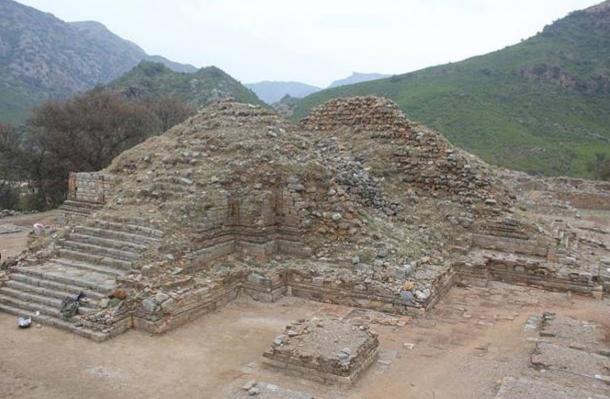
The Bhamala Buddhist complex enjoys an important geographical position in the Taxila valley and is one of very few sites to have a cruciform stupa.
Stupas are mound-like Buddhist complexes that contain Buddhist relics. They are used as places of meditation. The cruciform stupa is cross-shaped and is usually built and reserved for Buddha himself or for a chakravartin: a great and wise Buddhist man.
Abdul Hameed, lecturer of archeology at Hazara University in Mansehra district, says archeological excavations began in the area in 1930 by a British archeologist named John Marshall.
According to Abdul Hameed, the latest excavation unearthed a main stupa surrounded by votive stupas – a type of stupa constructed to gain spiritual benefits according to Buddhist beliefs – as well as some chapels and a monastery complex to the east of the main stupa.
The excavation was conducted under the supervision of archeologists from the University of Wisconsin-Madison (U.S.), Baroda University of India, the Directorate of Archaeology and Museums of KP, in addition to the archaeology department at Hazara University.
Discovering Buddha’s Death Scene
 
“During the joint venture, some other parts of the monastic complex have been exposed and the death scene of the 14-meter-tall Buddha was discovered. Now it’s the largest sculpture of Buddha in South Asia,” says Abdul Hameed, who worked as a field director with the Directorate of Archeology and Museums of KP during the excavation.
The Pakistani archeologist told OnIslam that the parinirvana (death scene of Buddha) found in Bhamala is the largest sculpture in the world made from kanjur stone.
He says that the pieces of this huge sculpture include the right leg of the Buddha and a portion of his left leg covered with drapery, in addition to the feet and shoulders.
“The statue was placed facing the east. The upper side of the left leg and the arms were found damaged to the east of the sculpture due to unknown reasons. The death scene of Buddha in stucco is now on display in the museum of Taxila city, Punjab province,” he says.
Abdul Hameed explained that after Marshall’s initial excavations, no major works were carried out at Bhamala until now.
The recent excavation aimed to expose the remaining portions of the site and to reconfirm that it dates back to the 7th century AD.
Priceless Artifacts Found
 
During the current excavation, about 510 antiquities, including terracotta sculptures, have been unearthed.
Among the items discovered were iron nails, hooks, door fittings and hairclips. The excavations also uncovered 14 copper coins belonging to the 3rdcentury AD Kushan Empire.
Balqees Durrani, an archeologist at Peshawar Museum, explained that a cruciform stupa was found behind the death scene of Buddha during the recent excavations.
Bhamal’s cruciform stupa is unique, she says, because all the other stupas belonging to the ancient Ghandara Kingdom all the way up to present day Peshawar are mostly square in shape.
“Nine chapels were exposed during the current investigation. In the newly excavated chapels, the images of Buddha are provided with double halos, which are very unique and don’t exist in the rest of the Buddhist sites of ancient Gandhara,” Durrani explains.
The Pakistani female archeologist said that such successful excavations of ancient sites show the rich heritage of Pakistan and the KP province in particular.
“We have similar sites in different areas of KP that belong to Ghandara and similar ancient kingdoms. If the Pakistani government showed further interest in excavating and exploring more of these historical sites, tourists and archeologists from all over the world will certainly visit these historical landmarks and the Pakistan will easily generate huge revenue,” she says.

The following article is about the same subject from Ancient Origins by Liz Leafloor
Buddha statue at Borobudur.

Large, Rare Statue Portraying the Death of Buddha Unearthed at Ancient Bahmala Stupa Site

Two rare and ancient Buddha statues have been unearthed at the Bhamala Stupa site in Pakistan. The largest ever statue found at the site depicts the death of ancient sage Buddha. A second statue unearthed is a Buddha with a double halo, the first of this type to be found at Bhamala Stupa.
The team of archaeologists with the Department of Archaeology and Museums in Pakistan found these artifacts and 510 others at the Bhamala Stupa archaeological complex, a UNESCO Heritage site.
Dr. Abdul Samad, director of the Department of Archaeology, Hazara University says of the artifacts, “This is one of the few sites in the world to have the cruciform Stupa which was reserved for Buddha himself.”
MORE
The stupa monument at Bhamala. Stupas are mounded spiritual sites, usually containing Buddhist relics.
The stupa monument at Bhamala. Stupas are mounded spiritual sites, usually containing Buddhist relics.  Muhammad Zahir/Wikimedia Commons
The 14-meter (46 feet) long statue of the dying Buddha is the largest known from the Gandhara civilization. It rests on a 15-meter (49 feet) platform, and portrays a scene known as Mahaparinirvana, said to be the moment Buddha’s consciousness left his body and he died.
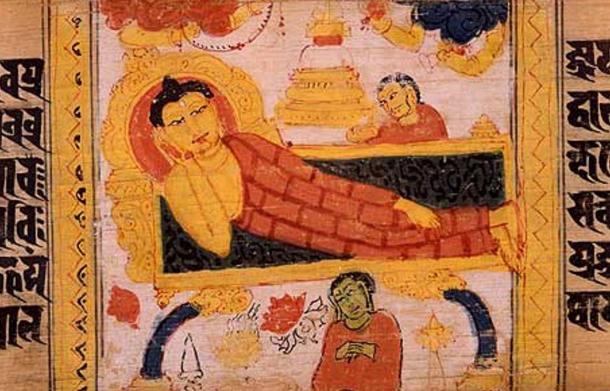
Sanskrit palm leaf manuscript illustrating the Buddha's entry into Parinirvana. Artwork created circa 700-1100 CE.
Sanskrit palm leaf manuscript illustrating the Buddha’s entry into Parinirvana. Artwork created circa 700-1100 CE. Public Domain
The death scene of the Buddha is a significant moment in the Buddhist religion, represented in art and literature.
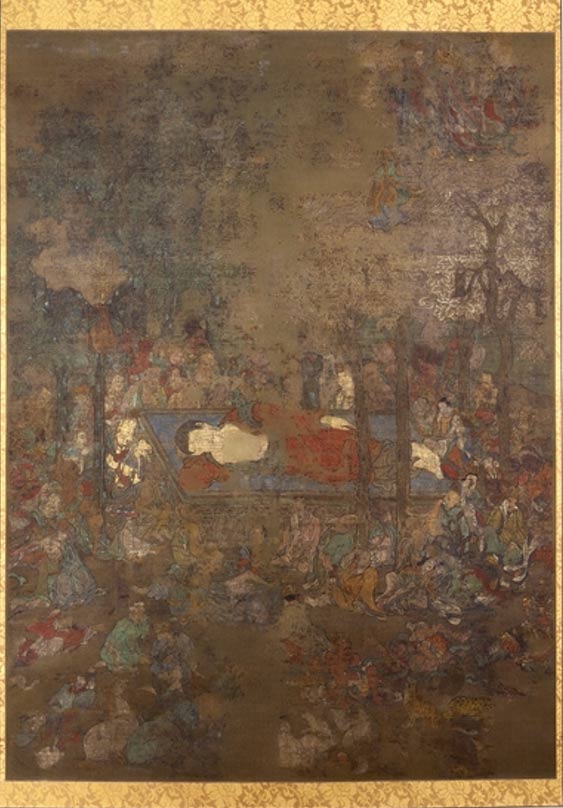
News site The Asahi Shimbun reports that a scroll depicting Buddha's death is being exhibited in Kyoto during this year's memorial service to commemorate Buddha’s passing. The large and elaborate vertical scroll dates to the 15th century and is 12 meters by 6 meters (39 feet by 19 feet) in size.
The Asahi Shimbun writes, “It was created by painter and monk Mincho (1352-1431) in the early Muromachi Period (1338-1573), and is one of the largest ‘nehanzu’ (paintings of Buddha's death) in Japan.
The painting depicts the dying Buddha with his head facing west as he is surrounded by mourning disciples and animals. A cat is depicted at the bottom of the picture grieving Buddha’s death, a rare feature in a nehanzu painting.”
The Death of the Buddha, a hanging scroll painting at the British Museum.
The Death of the Buddha, a hanging scroll painting at the British Museum. Credit: © Trustees of the British Museum
“Gautama the Buddha is the founder of Buddhism, a religion with around 300 million adherents, and is seen as a master and teacher even today,” writes Digital Journal.
The Bhamala Stupa site in Pakistan has revealed a wealth of history and treasure dating back thousands of years. Other excavations have uncovered hundreds of “terracotta artifacts, stucco sculptures, architectural elements, copper coins, iron nails, door sittings, pottery and 14 coins from the Kushan era,” reports The Express Tribune.
The site is believed to date back 2,000 years, and pending laboratory tests on recent finds, it may be even older.  Clay Buddha heads unearthed at the site this year might date back to the 3rd century A.D.
Unfortunately, some of the discoveries have suffered damage due to illegal excavations and looting over the years.
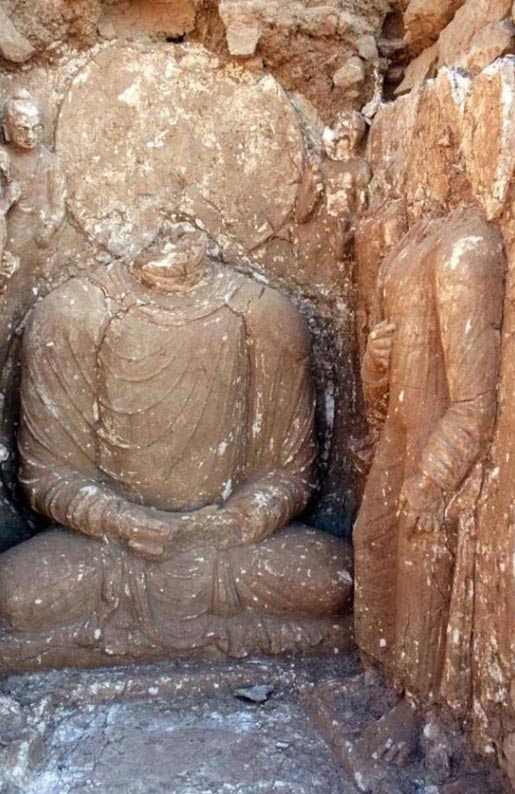
Samad notes, “The statue of Buddha's head is however missing, and may have been looted. “Other parts of the statue such as the left leg and arms were also found in a damaged condition.”
Excavations continue at the Bhamala Stupa – ancient site filled with long-hidden historical and spiritual treasures.
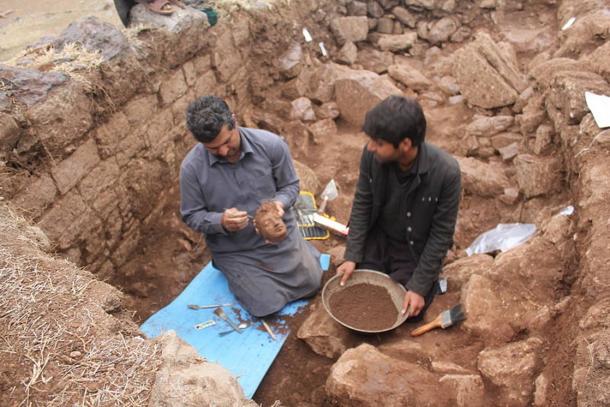
Hazara University Archaeologist - Dr. Muhammad Zahir - excavating at Bhamala Site in February 2013.
Hazara University Archaeologist - Dr. Muhammad Zahir - excavating at Bhamala Site in February 2013. Muhammad Zahir/Wikimedia Commons
Damaged stucco sculptures of Buddha at Bhamala.
Damaged stucco sculptures of Buddha at Bhamala. Credit: K-P Directorate of Archaeology & Museums
Featured Image: Buddha statue at Borobudur. Source: BigStockPhoto

Saturday, 23 May 2015

Цвет фото от Монголии в 1913 Color photo's from Mongolia in 1913

If you want to read this in your own language, click on the "Translate" button next in the right hand corner and select your own language (if English does not show up immediately, try any other language first and then English will finally show up as well on top of the list)

From: Prophotos-ru.livejournal.com   29 April 2012
visualhistorywrote in prophotos_ru

Продолжаем путешествие в волшебный мир Альберта Кана. Очередная часть его великой коллекции посвящена Монголии, которую фотограф Стафан Пассе посетил в 1913 гг.
Напомню, что независимость (внешней) Монголии от Китая была провозглашена только в конце 1911 г.  Богдо-гэгэн VIII, буддийский лидер страны, 29 декабря был возведён в Богдо-ханы, стал теократическим правителем нового государства. Под руководством русских военных советников была создана 20-тысячная монгольская армия. 3 ноября 1912 г. в Урге было подписано монгольско-российское соглашение, обозначавшее признание Монголии отдельной страной с одновременным установлением над ней российского протектората. Однако уже 5 ноября 1913 г. Россия признала сюзеренитет Китая над Монголией при сохранении за последней прав автономии.
Таким образом, Стефан Пассе запечатлел Монголию в тот момент, когда она была (по крайней мере, в широком смысле) частью Российской империи. При этом страна продолжала оставаться настоящим заповедником дремучего феодализма, "парком тимурского периода". И всё здесь было диковинным для европейца.
В журнале National Geographic этот снимок был опубликован с подписью: "монгольская женщина, приговорённая к голодной смерти":

Хотя этот ящик мог использоваться просто как переносная тюрьма, известная у кочевых народов.

"Два солдата казака в Урге", 1913 г. - представители ограниченного контингента, наглядный символ российского протектората:

Посмотреть в высоком разрешении без цветокоррекции.
Найздено здесь.


Самый лучший снимок - охотник в окрестностях Урги, 1913:

Крупное разрешение

Экипаж Стефана Пассе между Кяхтой и Ургой (видны флаги Франции и России):


Столица Монголии Урга (ныне Улан-Батор) 23 июдя 1913 г.:

Крупное разрешение

Урга в 1913:


Улочка в Урге:

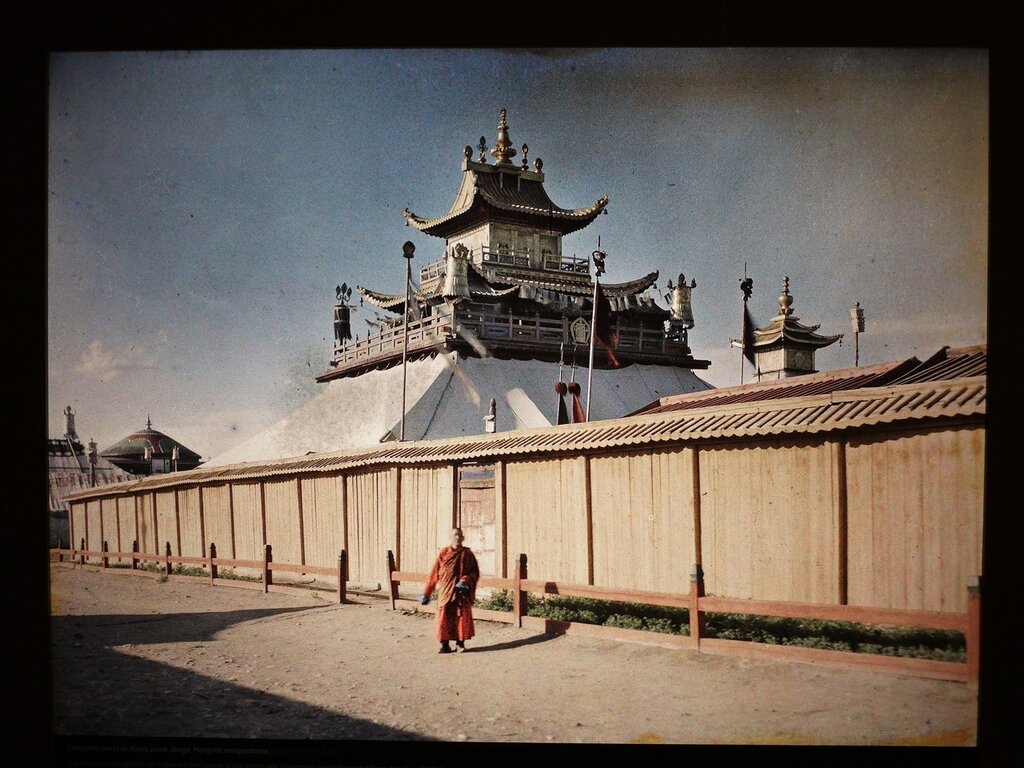
Храм в Урге:


Ступы монашеского квартала Гандан в Урге:


Лама около ступы:


Ламы у Желтого дворца:

Замужняя женщина в Урге:


Триумфальные ворота Желтого дворца в Урге:


Badamdorj в окрестностях Желтого дворца, Урга, 1913:


Юрты монголов:


Поселение кочевников во Внутренней Монголии. Китай, 1912 (снимок из предыдущей экспедиции в Китай):


Два всадника-бурята в Троицкосавске (уездный город Забайкальской области, в 4 верстах от китайской границы):


В 1921 г. в Монголии начнутся совсем другие времена.

Friday, 22 May 2015

Two-Day conference in Leiden: Gender Issues in Tibetan Buddhist Societies, 17th-20th Centuries

Current and Upcoming Events

Gender Issues in Tibetan Buddhist Societies, 17th-20th Centuries: A Conference in Memory of Anne Chayet


This two-day conference on gender in Tibetan societies is organized jointly by the research project groups 'Social History of Tibetan Societies' and 'Buddhism and Social Justice'. More details will be made available shortly on this website.


A Short Description of the Original Aims of the Project

Buddhism has a reputation in the modern West as a tradition of peace and justice. It is this romantic prejudice that leads to consternation when confronted with vivid, inescapable scenes of Singhalese Buddhists making war on Tamils, the Burmese junta shooting down monks, or Thai families selling their daughters into sexual slavery. We understand such things as injustices, just as we see racial or gender discrimination as unjust. And as we struggle to understand how such actions could coexist with Buddhist ideals, we wonder what our incomprehension says about our ability to understand historically Buddhist societies of Asia. 
The current NWO project explores key aspects of the historical roots and present-day situations of Buddhism and historically Buddhist societies in Asia through the lens of social justice, precisely through questions of the relation between Buddhist ideas and ideals on the one hand, and the realities we discover in Buddhist societies on the other. In these societies, inequalities, prejudicial discrimination and exploitation are every bit as present as they are anywhere else. Therefore, it is not a serious scholarly question to ask why Buddhists do not uphold the ideals of their tradition. What is interesting, however, is the question of how the dynamic tension between ideal and practice is negotiated in historically Buddhist societies, that is, in Asian cultures heir to the legacy of Buddhist teachings and practices.
While much investigation and thought has gone into exploring how Western (predominantly Christian) societies create and negotiate their moralities, from Israelite days to the present, very little comparable work has been done in Asian Buddhist cultures. Our project seeks to address this lack through simultaneous, conjoined investigations of both Buddhist ideologies, based on scripture and developed over the centuries by great thinkers, and social practices engaged in, encouraged, or discouraged, by Buddhist institutions and individuals.
The applicant’s work explores the Indian background of Buddhism, the fount of all later tradition, focusing on questions of labor, especially slavery, and caste. This provides the pivot around which revolve the other projects, which by engaging the interaction between theory and practice refer back both historically and conceptually to the Indian sources of all Buddhist traditions. One of the key questions we seek to answer is how Indian sources (themselves multiple and diverse) have been appropriated and transformed as the tradition spread. Four satellite projects coordinate symbiotically with the applicant’s research, and among themselves. These projects deal with medieval Korea and the slaveholding of Buddhist monasteries, exploring this almost completely ignored aspect of Korea’s past, the roots of discrimination against burakumin (‘outcastes’) in Japan, monastic regulations and their influence on justice inside monastic institutions and in relations with the outside world in pre-modern and modern Tibet, and the roots of hierarchy and Buddhist identity in Sri Lanka. The dual focus on (unfree) labor and economic exploitation and social status frame and provide the evidence for broader conversations about the role of the idea of karma and conceptions of personal identity (‘self’) which appear to have played a significant role in shaping Buddhist attitudes.
The overall theme of ‘Buddhism and Social Justice’ is nothing other than the question of freedom and justice, and the relationship between them, which rests in local economic and social contexts. We therefore aim to challenge commonly held notions of Buddhism as largely defined by and virtually embodying a path to liberation. Simultaneously, we aim to ascertain the inner dynamics of Buddhist traditions as they mold, and are molded by, their social environments. ‘Buddhism and Social Justice’ therefore both highlights the tension between historical reality and scripturally expressed ideology and reaches beyond, drawing a picture of a Buddhism simultaneously part of, structured by and challenging its social environments.

Tuesday, 19 May 2015

Zheng He's shipyard in Nanjing found?

Builders unearth 'ancient shipyard of China's Columbus'

Zheng He, China's most famous maritime explorer, and his "Treasure Fleet" plied the oceans during the early 15th century 

335
100
0
53
488
Email
Experts estimate that a construction site in Nanjing, Jiangsu province, where hundreds of shipbuilding tools have been unearthed, contains the remains of a shipyard that built vessels for one of China's greatest navigators, Zheng He 
Construction workers in Nanjing have unearthed what experts believe could be an ancient shipyard that supplied vessels to a legendary explorer known as "China's Columbus". 
The Longjiang Shipyard helped build the fleet of Zheng He, a eunuch admiral whose epic voyages in the early 15th century made him China's most celebrated maritime voyager. 
The admiral's "Treasure Fleet" – a gigantic navy with junks that had up to nine masts and were sometimes 400ft long – carried cargos of porcelain, silk and tea as far afield as Africa until the emperor pulled the plug on China's maritime ambitions following Zheng's death. 
"It was a unique armada in the history of China – and the world – not to be surpassed until the invasion fleets of World War I sailed the seas," Louise Levathes wrote in When China Ruled the Seas, a book on the period. 
Zheng He's armada was partly built at the Longjiang Shipyard in Nanjing, China's then capital, around 160 miles west of Shanghai. At its peak its docks were home to an army of between 20 and 30,000 shipbuilders who came from as far afield as Hunan and Guangdong provinces, according to Ms Levathes. 

A full size replica of Zheng He's treasure ship at the site of the shipyard where original ship was built in Nanjing (Alamy)
However, the Yangtze River shipyard was lost under Nanjing's urban sprawl as it swelled into today's city of nearly four million residents. That began to change in September last year when a local antiques collector got word that workers on a riverside building site had unearthed and then sold what they thought was a large door. 
Wang Shiqing, the collector, tracked the door down and discovered it was actually the rudder of an "ancient ship". 
Subsequent excavations in the same area uncovered what are believed to be iron anchors and shipbuilding tools such as axes, stone hammer, nails and knives. 

Items unearthed at the construction site in Nanjing
"When I first saw these shipbuilding tools I realised that this was not your average archaeological site," Mr Wang told Nanjing's Jinling Evening Post. "It is very likely to be an ancient shipyard." 
Speaking to The Telegraph on Monday, Mr Wang said: "I am 80 per cent sure that this is the site of the Longjiang Shipyard but we still need to wait for the results of its excavation." 
Zheng He was born in what is today Yunnan province in 1371. He rose to prominence under the Yongle emperor, the Ming Dynasty's third ruler, and made seven naval expeditions into the Indian Ocean with his 27,000-sailor team between 1405 and his death in 1433. 
A controversial 2002 book by a British historian claimed that the Chinese admiral had discovered the Americas more than 70 years before Columbus. 
Despite his exploits, Zheng He was largely forgotten until just over a decade ago when Beijing began to revive his story as an example of China's peaceful interaction with its neighbours. 

Items unearthed at the construction site in Nanjing
China has also used the admiral's adventures to promote renewed attempts to extend its reach over the seas by building a powerful "blue water navy". 
Zhao Zhigang, a Nanjing-based maritime expert, told the Jinling Evening Post the recent discovery was "very likely" to be the Longjiang Shipyard. 
Wang Shiqing said that although the shipyard's existence had been widely documented in Ming Dynasty literature no trace of it had ever been found. 
If the find was confirmed, authorities "should build a museum above the original site to protect and display these relics", he said. 
Additional reporting Ailin Tang