The Mongols in Iran: Qutb Al-Din Shirazi's Akhbar-i Moghulan
by George Lane
Hardcover: 136 pages
Publisher: Routledge; 1 edition (1 May 2018)
Language: English
ISBN-10: 1138500526
The polymath, Qutb al-Dīn Shīrāzī, operated at the heart of the Ilkhanate state (1258–1335) from its inception under Hulegu. He worked alongside the scientist and political adviser, Nasir al-Dīn Ṭūsī, who had the ear of the Ilkhans and all their chief ministers.
The Mongols in Iran provides an annotated, paraphrased translation of a thirteenth-century historical chronicle penned, though not necessarily authored, by Quṭb al-Dīn Shīrāzī. This chronicle, a patchwork of anecdotes, detailed accounts, diary entries and observations, comprises the notes and drafts of a larger, unknown, and probably lost historical work. It is specific, factual, and devoid of the rhetorical hyperbole and verbal arabesques so beloved of other writers of the period. It outlines the early years of the Chinggisid empire, recounts the rule of Hulegu Khan and his son Abaqa, and finally, details the travails and ultimate demise and death of Abaqa’s brother and would be successor, Ahmad Tegudar. Shirazi paints the Mongol khans in a positive light and opens his chronicle with a portrait of Chinggis Khan in almost hallowed terms.
Throwing new light on well-known personalities and events from the early Ilkhanate, this book will appeal to anyone studying the Mongol Empire, Medieaval History, and Persian Literature.
The Mongol conquest of north China between 1211 and 1234 inflicted terrible wartime destruction, wiping out more than one-third of the population and dismantling the existing social order. In the Wake of the Mongols recounts the riveting story of how northern Chinese men and women adapted to these trying circumstances and interacted with their alien Mongol conquerors to create a drastically new social order. To construct this story, the book uses a previously unknown source of inscriptions recorded on stone tablets. Jinping Wang explores a north China where Mongol patrons, Daoist priests, Buddhist monks, and sometimes single women-rather than Confucian gentry-exercised power and shaped events, a portrait that upends the conventional view of imperial Chinese society. Setting the stage by portraying the late Jin and closing by tracing the Mongol period's legacy during the Ming dynasty, she delineates the changing social dynamics over four centuries in the northern province of Shanxi, still a poorly understood region.
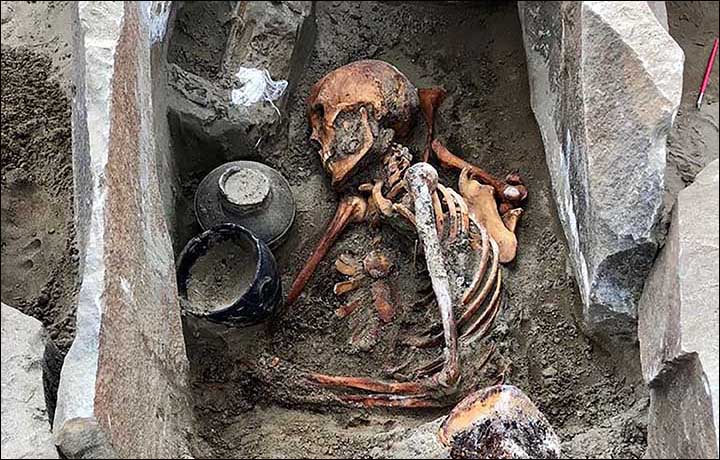
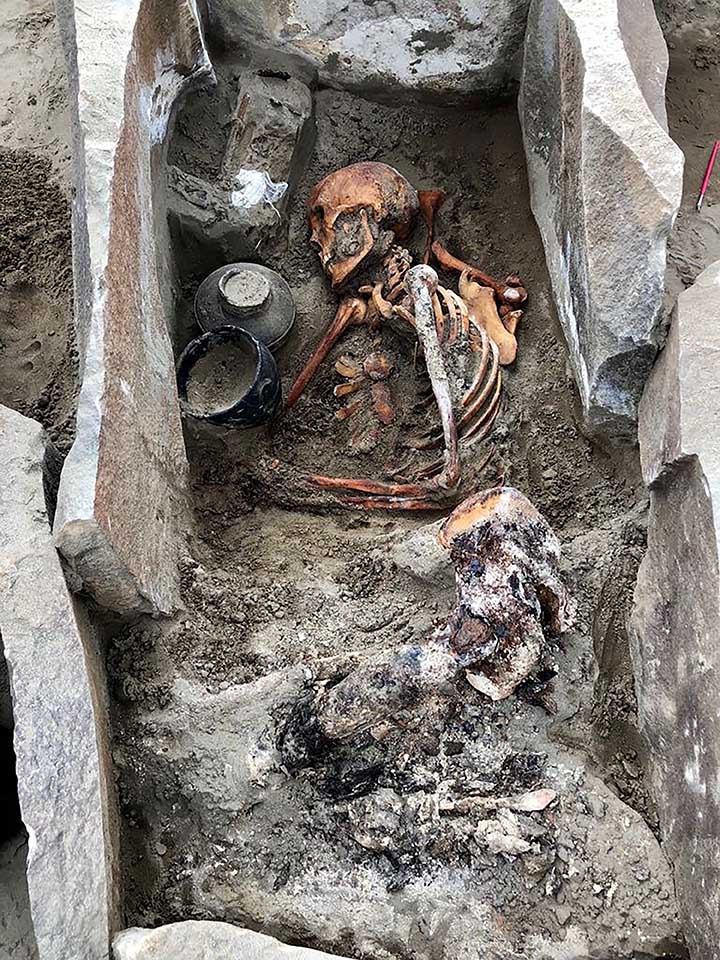
The ancient woman was buried wearing a silk skirt with a funeral meal. Picture: Marina Kilunovskaya
After a fall in the water level, the well-preserved mummy was found this week on the shore of a giant reservoir on the Yenisei River upstream of the vast Sayano-Shushenskaya dam, which powers the largest power plant in Russia and ninth biggest hydroelectric plant in the world.
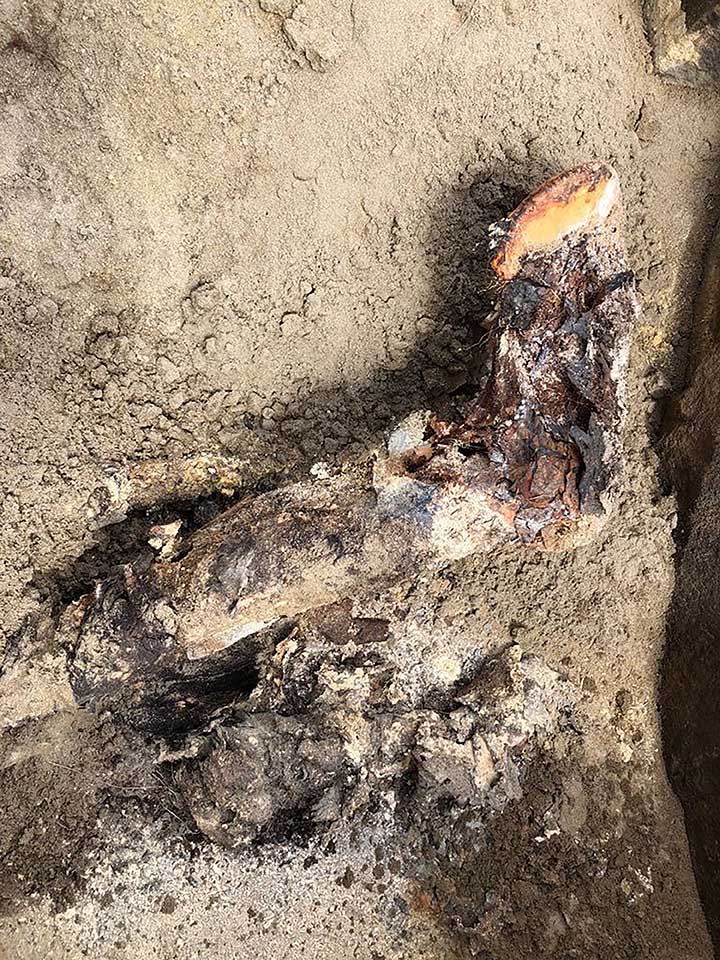
The ancient woman was buried wearing a silk skirt with a funeral meal - and she took a pouch of pine nuts with her to the afterlife.
In her birch bark make-up box, she had a Chinese mirror.
Near her remains - accidentally mummified - was a Hun-style vase.
‘The lower part of the body was especially well preserved.' Pictures: Marina Kilunovskaya
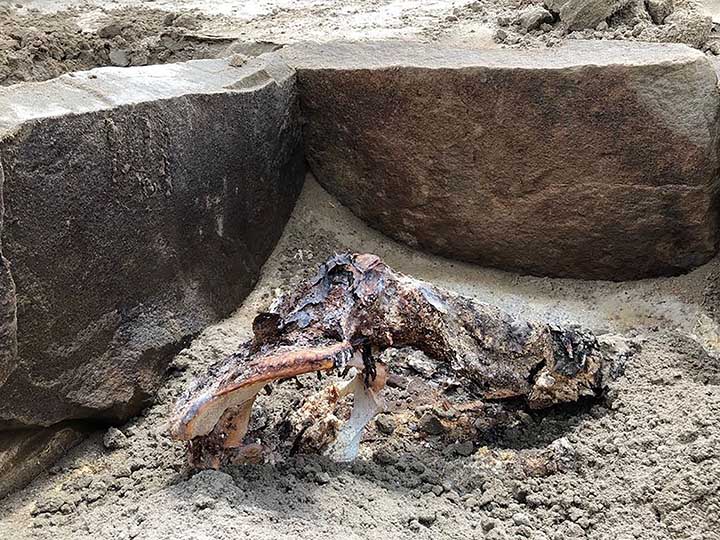
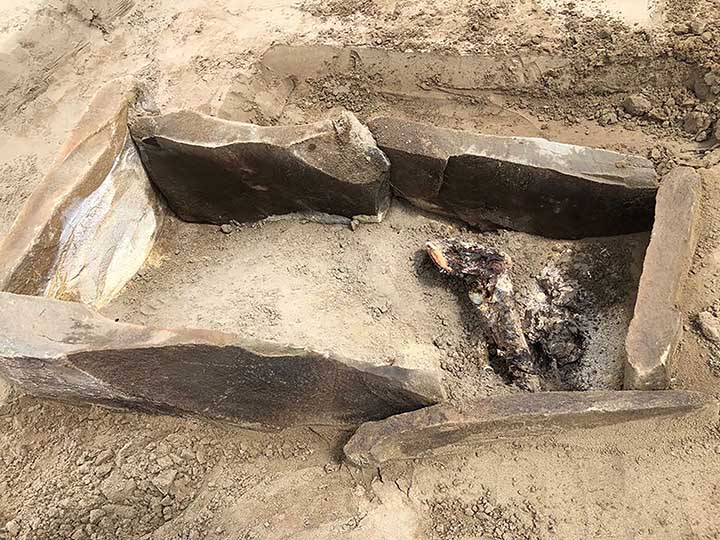
A team of archeologists from St Petersburg’s Institute of History of Material Culture (Russian Academy of Sciences) working on the shoreline in Tyva Republic spotted a rectangle-shaped stone construction which looked like a burial.
'The mummy was in quite a good condition, with soft tissues, skin, clothing and belongings intact,’ said a scientist.
Natalya Solovieva, the institute's deputy director, said: 'On the mummy are what we believe to be silk clothes, a beaded belt with a jet buckle, apparently with a pattern.
Archeologist Dr Marina Kilunovskaya said: 'During excavations, the mummy of a young woman was found on the shore of the reservoir.
‘The lower part of the body was especially well preserved ...
‘This is not a classic mummy - in this case, the burial was tightly closed with a stone lid, enabling a process of natural mummification.’
‘This is not a classic mummy - in this case, the burial was tightly closed with a stone lid, enabling a process of natural mummification.’ Pictures: Channel 5
She was buried around 1,900 to 2,000 years ago, scientists believe ahead of exhaustive tests.
Astonishingly, the remains were preserved even though they have been underwater for periods since the dam became operational between 1978-85.
Dr Solovieva said: ‘Near the head was found a round wooden box covered with birch-bark in which lay a Chinese mirror in a felt case.’
Near the young woman were two vessels, one a Hun-type vase.
Sayano-Shushensk water reservoir. The shoreline of the reservoir when the water retreats.
‘There was a funeral meal in the vessels, and on her chest a pouch with pine nuts.'
Restoration experts have started working on the mummy.
Analysis of the find is expected to yield a wealth of information on her life and times.
Scientists received a grant from the Russian Geographical society to rescue the unique archeological finds in flooded areas.
The Wakhan Quadrangle became an arena of colonial competition when four powers - Afghanistan, China, Great Britain and Russia - struggled for dominance in a remote mountain region where only scattered communities lived in a challenging environment - called the "Great Game." Prior to this, various international travellers had been sent out, commissioned to record routes, military details and strategic information for the respective parties in the contest. Among the explorers were so-called indigenous intermediaries who were trained in measuring geodetic parameters and who noted down their observations about the customs, culture and economy of the people. They were expected to be knowledgeable in terms of linguistic skills and cultural practices and were less likely than their colonial masters to arouse suspicion. Munshi Abdul Rahim was an explorer who was sent to Wakhan and Badakhshan in 1879-1880 by the first British Political Agent in Gilgit. His report, reprinted in facsimile, is the centerpiece of this book. It was written during a crucial period for Wakhan that resulted in the imperial division of the formerly independent principality into two parts and the flight and migration of a large share of its inhabitants. His account is preceded by an introduction to the "Great Game" and its implications for the Central Asian interface. Munshi Abdul Rahim's narrative serves to discuss the function of providers of 'political' and 'non-political' information, i.e. the distinction between exploration and espionage from colonial times to the present day. The comments and interpretations are embedded in archival research and fieldwork done by the author over 40 years.
Zwischen 616 und 1180 meißelten buddhistische Mönche des rund 75 km südwestlich von Beijing gelegenen Wolkenheimklosters buddhistische Sutren in Stein, um die heiligen Schriften vor dem erwarteten Weltende zu retten. Am Ende dieses wahrscheinlich größten epigraphischen Projektes der Weltgeschichte waren rund 1.600 Texte auf 15.000 Platten mit insgesamt etwa 31 Millionen Schriftzeichen fertiggestellt.
Die für das Steininschriftenprojekt wohl bedeutendste Phase war die Zeit der Liao-Dynastie (907-1125), als in nicht einmal 100 Jahren beinahe die Hälfte der Steinplatten, auf denen etwa ein Drittel aller Schriftzeichen eingraviert ist, angefertigt wurde. Durch eine detaillierte Analyse der Kolophone dieser Zeit werden nicht nur Arbeitsprozesse und Hintergründe des Projekts beleuchtet, die Kolophone geben auch seltene Einblicke in Politik, Gesellschaft und Buddhismus der Liao sowie in das Verhältnis zwischen den herrschenden Kitan und der Han-chinesischen Bevölkerung dieser Region.
Das Werk, das auch aktuelle archäologische Funde aus dem Nordosten Chinas berücksichtigt, stellt eine wichtige Ergänzung zur politischen, sozialen und kulturellen Geschichte der Liao-Dynastie dar.
A towering, human-like figure carved from wood and discovered in a Russian peat bog is more than twice as old as the Egyptian pyramids, scientists have found.
Gold miners discovered pieces of the elongated structure, dubbed the Shigir Idol, in 1894. But it wasn't until about 100 years later, in the late 1990s, that researchers did radiocarbon dating and found that the structure was about 9,900 years old, making it the oldest wooden monumental sculpture in the world, the researchers said.
But this dating wasn't reliable because it included only two pieces from the idol. So scientists recently did a more exhaustive analysis and discovered that the idol is much, much older than previously thought — about 11,500 years old — meaning it was constructed just after the last ice age ended. [25 Grisly Archaeological Discoveries]
This date makes the Shigir Idol more than double the age of the Great Pyramid of Egypt, which was built in about 2550 B.C.
In addition to updating the sculpture's birthday, the researchers found a previously unknown face carved into it, said study co-researcher Thomas Terberger, an archaeologist at the State Agency for Heritage Service of Lower Saxony, in Hannover, Germany.
The head of the wooden Shigir sculpture (1-6) and anthropomorphic face on fragment (7-10).
Credit: E.F. Tamplon; Antiquity 2018
Incredible find
It's a "miracle" that the Shigir Idol survived all this time, Terberger told Live Science. Researchers began studying the larch-carved figure after it was found in the Shigir peat bog, in Russia's Middle Ural Mountains. Pieced together, the sections of the humanoid idol stood more than 17 feet (5 meters) high.
Unfortunately, some of those sections have since been lost, so the idol now stands about 11.1 feet (3.4 m) high, Terberger said. The public can see the carved anthropomorphic figure at the Sverdlovsk Regional Museum.
"When I visited the Sverdlovsk Regional Museum for the first time, I was completely surprised by seeing this large wooden sculpture on display in the exhibition," Terberger said. "If you come closer to the sculpture, you will notice that the 'body' is decorated by geometric ornamentation and a few small human faces."
A drawing of the Shigir sculpture, including (A) the position of the anthropomorphic face discovered in 2014 and (B) the position of an anthropomorphic face found in 2003.
Credit: Tolmachev (1914); Antiquity 2018
Some 20 years after it was discovered, researcher Vladimir Yakovlevich Tolmachev drew illustrations of the idol, noting the structure's five faces, the researchers of the new study noted. In 2003, a sixth, animal-like face with a rectangular nose was found by study co-researcher Svetlana Savchenko, a scientist at the Sverdlovsk Regional Museum.
Just like a hidden-pictures game, the idol surprised researchers again in 2014, when Savchenko and lead study researcher Mikhail Zhilin, an archaeologist at the Institute of Archaeology in Moscow, discovered a seventh face concealed in the gnarled wood.
These facial findings show that the early hunters, gatherers and fishers of Eurasia were making what was possibly spiritual art during the early Mesolithic, the researchers said.
"Such a big sculpture was well visible for the hunter-gatherer community and might have been important to demonstrate their ancestry," Terberger said. "It is also possible that it was connected to specific myths and gods, but this is difficult to prove."
Terberger noted that many researchers studying early humans focus on the Fertile Crescent in the Middle East. But the Shigir Idol indicates that these researchers should widen their search, given the "unexpected, complex monumental wooden art objects" of the Ural Mountains, he said.
The study was published online today (April 25) in the journal Antiquity. The research was made possible by Natalia Vetrova, the director of the Sverdlovsk Regional Museum, Terberger added.
Publisher: Independently published (25 April 2018)
Language: English
ISBN-10: 1980893969
In the steppes of High Asia, the year 1166… ‘What is a Mongol? – As free as the geese in the air, as in unison. The flights of the geese promise us we don’t give up independence, to unite.’ The hundred tribes of the Mongols have come together with one aim: to push back against the walls that have crept onto the steppe – farther than China has ever extended its walls before. Walls are repugnant to a nomad. But can people on horses push them down, even with a united effort? This story begins when nobody has heard of Mongols – not even most Chinese, who think the vast Northern Waste at its weakest and are right. A spectacular history starts obscurely… Against Walls is the first in a trilogy that gives voice to the Mongols in their explosive encounter with the great world under Tchingis Khan. Both epic and intimate, Amgalantsees the world through Mongol eyes. It’s different from the world you know.
Publisher: Independently published (25 April 2018)
Language: English
ISBN-10: 1980900604
In the steppes of High Asia, the year 1188… ‘Jamuqa rode his trophy mare, off-white, black-pointed, on a Tartar seat, high arches of ornamental silver fore and aft. He wore a winterfur of snow leopard, near white with black whorls. The effect was kingly and fantastic: he might be Irle Khan himself, the king of ghosts, in his eery splendour.’ Aged twenty, Temujin has been named Tchingis, khan over the Mongols. But only a third of his people accept a kingship based on dreams and omens. His own sworn brother Jamuqa challenges his title, and comes in the guise of a mock king against him. The steppe has been without a great khan for three hundred years – fragmented in the face of giant China. Are dreams and omens enough to unify its peoples? What makes a true king? Imaginary Kings is the second in a trilogy that gives voice to the Mongols in their explosive encounter with the great world under Tchingis Khan. Both epic and intimate, Amgalant sees the world through Mongol eyes. It’s different from the world you know. ‘Amgalant brings to life a complex, remote society with amazing immediacy’
Publisher: Cambridge University Press (31 July 2018)
Language: English
ISBN-10: 1108441009
How did women contribute to the rise of the Mongol Empire while Mongol men were conquering Eurasia? This book positions women in their rightful place in the otherwise well-known story of Chinggis Khan (commonly known as Genghis Khan) and his conquests and empire. Examining the best known women of Mongol society, such as Chinggis Khan's mother, Hö'elün, and senior wife, Börte, as well as those who were less famous but equally influential, including his daughters and his conquered wives, we see the systematic and essential participation of women in empire, politics and war. Anne F. Broadbridge also proposes a new vision of Chinggis Khan's well-known atomized army by situating his daughters and their husbands at the heart of his army reforms, looks at women's key roles in Mongol politics and succession, and charts the ways the descendants of Chinggis Khan's daughters dominated the Khanates that emerged after the breakup of the Empire in the 1260s.
Women and the Making of the Mongol Empire shall become one of the main reference books not only for the history of Mongol women, but of Mongol empire as a whole. Its analysis of the role of women, especially during the formation and the decades of the united Mongol Empire, is of special relevance for anyone interested in this period. Anne F. Broadbridge has managed to succeed in the always difficult task of combining a solid research with an accessible language that will certainly make this read appealing to scholars and students alike.
Bruno De Nicola, Goldsmiths College, University of London
A brilliant addition and timely corrective to the study of the Mongol Empire. Professor Broadbridge has produced an exciting and unique contribution to the scholarship of the Mongol Empire which will forever change our understanding of the Mongol elite.
Timothy May, University of North Georgia
This book is far more than a gendered history of the Mongol Empire. By exploring the highly complex place of women and marriage in imperial politics, it helps to make sense of the alignments within the imperial dynasty and the actions and policies of Mongol khans and princes.
Peter Jackson, Keele University
In this intelligent and original book, Anne F. Broadbridge has carried the study of women in the Mongol Empire to a new level, and has made an important contribution to our understanding of the Mongol Empire as a whole. The analysis goes well beyond the lives and activities of the most prominent Mongol women to show how dynastic marriages shaped central military institutions and brought manpower into the Mongol enterprise. In examining the family strategies of both privileged and secondary wives, Broadbridge sheds much new light on the difficult and disputed question of tribes within Mongol society, and will be a valuable resource for all future work. Finally, in her fascinating chapters on conquered women, she investigates the emotional and social lives of a group of women who have until now been largely overlooked, but nonetheless played an important part in Mongol history. This work thus offers important new insights on the formation of the Mongol Empire and its successor states.
The epic story of Genghis Khan and the Mongol conquests of Eurasia generates widespread interest, yet still today few know the truth of the matter. Still harder to find are the stories of Genghis Khan's womenfolk, even though no one doubts that there were many, many women in his life. In this lecture, Professor Broadbridge will present three key moments from Mongol history to illustrate the way that imperial women's contributions have dramatically changed Mongol history as we know it.
Anne F. Broadbridge is an Associate Professor of medieval Islamic history at the University of Massachusetts Amherst. She is currently finishing her second book, Imperial Women in the Mongol Empire. Her first book was Kingship and Ideology in the Islamic and Mongol Worlds (Cambridge, 2008). Her research focuses on two fields: first, the Mamluk Sultanate, with a particular interest in diplomacy and ideology; and second, the Mongol Empire, especially ideology, women and politics. She teaches on the Mongols, the Crusades, the Ottomans, early Islamic History, and Islamic Thought.
The notion of "silk roads" conjures images of ancient trade routes, both across land and sea, connecting China with the outside world. Since in recent years there has been something of a paradigm shift in the study of Chinese maritime history, we have chosen the title Beyond the Silk Roads to better convey the most recent trends that take us beyond simple bilateral discussions of trade and economics. Not only scholars within China have taken an interest in this exciting, fast-growing field, but also scholars from across the globe. These include historians as well as archaeologists, anthropologists, geographers, sociologists, and political scientists. Based on new documentary, literary, archaeological, and ethnographic research, the authors explore the multi-dimensional and diverse range of topics that today are subsumed under the heading of maritime history and culture. Utilizing interdisciplinary and multi-linguistic methodologies, the chapters offer cutting-edge discourses on China's role in East Asian maritime history and culture. Chapters include topics on marine archaeology, port cities, sailing routes, trade and cultural networks, nautical technology, folklore, diasporas, law and maritime law, coastal defence, piracy and smuggling, religion and religious cults and many more. It is hoped that this volume will stimulate further research and discussions on maritime history in general and on Asian maritime history in particular.
The catalogue features four sections. The first of "Imperial Portraits" presents the Museum's two precious albums of bust portraits of Mongol Yuan emperors and empresses in their entirety, the former having eight leaves and the latter fifteen. The second one on "Life and Culture" includes a selection of twelve artifacts, including three paintings and two jades on hunting or falcons that mainly describe how the Mongols still preserved important aspects of their nomadic lifestyle after becoming the rulers of China. Two books from the Yuan dynasty on poetry and food record the literary and culinary side of Mongol Yuan life, while a Yuan illustrated ceramic presents the period interest in drama. The Mongols and their long heritage as followers of Tibetan Buddhism led to the selection here of a Buddhist tapestry and illustrated sutra, while a Taoist text presents another facet to the diversity of religious beliefs in the Yuan dynasty. When Kublai Khan ordered Preceptor of State Phagspa to create a new form of writing for the Mongolian language in 1260, the result was "Phagspa scipt," which became the national language in 1269. For this catalogue, five Yuan dynasty seals featuring this script have been chosen, providing valuable information on the Mongolian language. The third section on "History and Geography" includes six important treatises on these two subjects from the Yuan dynasty, while the fourth section on "The Imperial Collection" features five works of "national treasure" status once in the Yuan imperial collection, as evidenced by seals impressed on them by members of the imperial family and their institutions. It indicates that these works were also highly prized by the Mongol rulers for their cultural and artistic value. With the collection of the National Palace Museum as seen here, I firmly believe that a concrete understanding of Mongol Yuan culture can be achieved.