Wednesday, 10 October 2012

Remembering Syria's historic Silk Road souk in Aleppo


Coverage of the war in Syria is rightly focused on the human cost, but there are cultural casualties too, says Kevin Rushby, who remembers Aleppo's Souk al-Madina, a Unesco world heritage site, which was destroyed by fire earlier this week

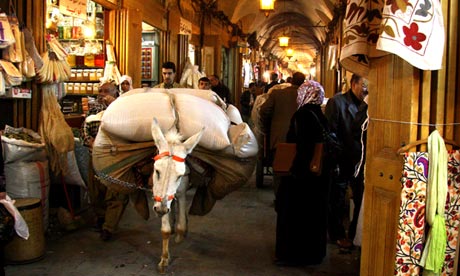
Aleppo souk, Syria
Aleppo souk, Syria Photograph: Kevin Rushby
A few miles from Aleppo are the hills where human beings first domesticated wild grasses. All the wheat we eat originates from those plants and the first farmers. Once those hunter gatherers settled, they set in motion developments that led to towns and then markets. Aleppo was one such place and its souk lay on the first great trade routes, becoming part of an economic engine that made astonishing new products available to more and more people. The warehouses filled up with soaps, silks, spices, precious metals, ceramics and textiles, especially the colourful and diaphanous type favoured by harem-dwellers. Eventually all this mercantile activity focussed into one particular area and a fabulous bazaar was built, mostly in the Ottoman heyday of the 15th and 16th centuries. It was a honeycomb of surprises and flavours, a tribute to the best aspects of human society, but now it has run smack into the opposite tendency: war.
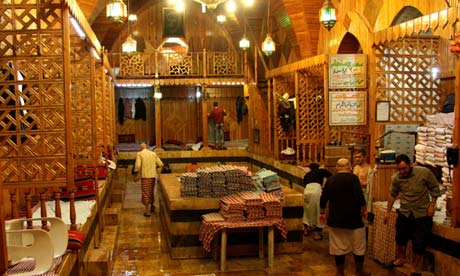
Hammam al-Nahasin in Aleppo souk, SyriaTraditional Turkish baths Hammam al-Nahasin in Aleppo souk. Photograph: Kevin Rushby
Of course, the human suffering is far more important and pressing, but I also mourn the loss of a place that so effortlessly encapsulated everything that was light, vivacious, sociable and friendly, everything that war is not. Architecturally the bazaar was not unique. What it had was tradition, heritage and incredible diversity. Five hundred years after Shakespeare made Aleppo souk the epitome of a distant cornucopia, you could still buy almost anything here, eat and drink a vast range of dishes, and even bathe in the traditional Hammam Nahasin. There were eight miles of lanes linking a range of khans or caravanserai – the British Consul held court in one of them well into the 20th century. When I first wandered in via the gate near the citadel, I discovered that there was only one thing I could not find in there: the desire to leave. It was just too diverting and fascinating. Every shopkeeper seemed to want to have a chat over a glass of red tea.
"Let me tell you about scarves. You buy antelope hair for the woman you want and silk for the mistress.'
"What about wives?"
He shrugs. "We have polyester. It comes with divorce papers."
It was clear that this was not a place that ever stood still. Neither was it a museum, and certainly not a pastiche preserved for tourists. One vendor explained that his shop had not been in the family very long: "We got it when the Jews left."
"1948?"
"No, 1908."
I checked later and discovered that many Jews, having come to Aleppo from Spain in the 15th century, then left for America at the turn of the 20th century to avoid conscription into the Ottoman army. Other communities had come when they lost out elsewhere. Many of Aleppo's Christians had come from Turkish cities like Urfa in 1923, bringing with them priceless collections of ancient documents, now also threatened. Ringed around the souk were the churches and mosques of a baffling array of sects and ethnicities, but they all shopped together in apparent harmony.
In great trading cities filled with communal diversity, the inhabitants usually learn to get along and trust each other. It is outsiders who bring danger and suspicion. In fact Aleppo has been sacked, destroyed and left in ruins many times over. When Tamerlane visited in 1400, he left a pile of severed heads outside – reportedly 20,000 of them. The Byzantines had previously done their worst, as had the Mongols, more than once. But it was politics that did for the city's pre-eminence as a market. Slowly and inexorably it was cut off from its hinterlands. The Silk Road died, the Suez Canal was dug, the northern territories were taken by Turkey as were the ports of the Levant. The machinations of the Great Powers turned a vibrant trading city into a divided backwater.
In some ways that decline helped preserve the medieval nature of the place, but now it is gone. When Syria rises out of the chaos, there can be some idea of restoration. But any future attempt to rebuild will always be a re-creation, probably with the tourist buck in mind. That will be better than nothing, of course, but it cannot hide the fact that one of the world's greatest treasures has been lost.

10 CULTURAL TREASURES LOST IN THE LAST DECADE

The Citadel of Aleppo, Syria

As well as Souk al-Medina, the city's citadel was shelled by government artillery. A medieval fortress built on top of several previous structures, it contains a 5,000-year-old temple that was only discovered in 2009. Fighting is said to have destroyed the medieval iron gates.

The ruins of Apamea city, Syria

Built by the inheritors of Alexander the Great's empire, Apamea in north-west Syria has suffered badly with damage from fighting followed by looting. Thieves reportedly drilled two metres to strip priceless mosaics out of the floor and walls.

Krak des Chevaliers, Syria
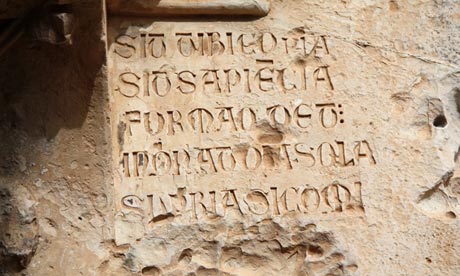
Crusader graffiti in Krak des Chevaliers church, SyriaCrusader graffiti in Krak des Chevaliers church. Photograph: Kevin Rushby
This supreme example of Crusader military architecture is one of Syria's big visitor attractions. Artillery fire and fighting has apparently been followed by looting. The church with its unique 12th-century Crusader graffiti has reportedly been damaged.

The Dead Cities, Syria
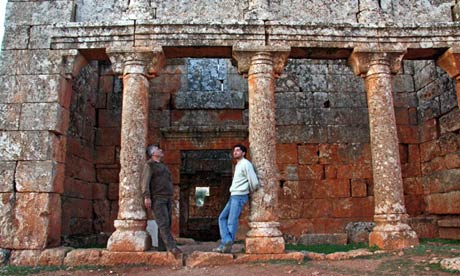
Serjilla, SyriaSyrian tourists at Serjilla, one of around 700 Byzantine dead cities, now the scene of fighting. Photograph: Kevin Rushby
Scattered around Aleppo are up to 700 ruined cities dating from the first to eighth centuries AD. Evocative and abandoned they are a unique record of life in ancient times. They have also become a battlefield and heavy damage has been reported.

National Museum and Library, Baghdad, Iraq
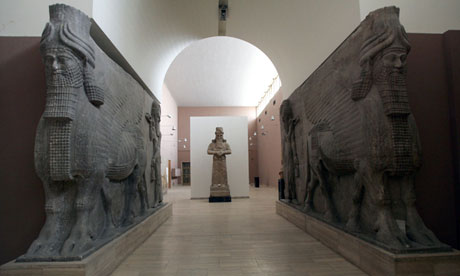
National Museum, IraqNational Museum, Iraq. Photograph: Ali Abbas/EPA
Home to more than 40,000 ancient documents, the National Library was burned down in April 2003. The National Museum was looted and destroyed a few days earlier while American soldiers looked on. Statues and artefacts, many of them enormous, were lost. About 5,000 documented lost pieces have since been returned or recovered, including the 5,000-year-old alabaster Warka Vase. The priceless collection of 4,800 seals is still missing.

Mosul Museum, Iraq

In the north of Iraq, Mosul's great collection of art and antiquities was also looted. Assyrian, Sumerian and Parthian treasures were taken, and many objects were broken and destroyed in the process.

The minaret of Malwiya, Samarra
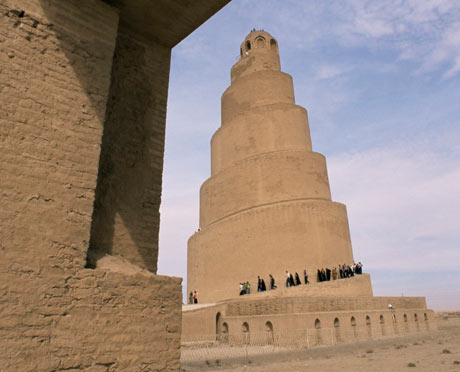
The minaret of Malwiya, Samarra, IraqThe minaret of Malwiya, Samarra, Iraq. Photograph: Nico Tondini/Robert Harding World Imagery/Corbis
One of Iraq's great architectural treasures, the 9th-century spiral minaret was allegedly used by US forces as a sniper post resulting in a bomb blast by insurgents during 2005 which damaged the top of the minaret.

Islamic shrines, Timbuktu, Mali
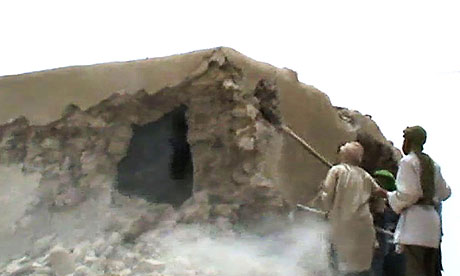
TimbuktuA still from a video shows Islamist militants destroying an ancient shrine in Timbuktu. Photograph: AFP/Getty Images
In actions reminiscent of Cromwell's troops' attacks on decoration in churches, hardline Islamists have reduced some of Timbuktu's medieval Sufi shrines to rubble. Recent efforts to catalogue and preserve the city's treasury of documents are in jeopardy.

Afghanistan

Antiquities continue to be lost with important inscriptions and carvings disappearing. A Buddhist monastery outside Kabul is the latest to be threatened with destruction, this time not by war but by a copper mining company.

Libya

Encouragingly, Libya seems to have got off lightly during its recent conflict though reports of damage to Islamic shrines are now appearing as hardliners try to stamp out "idolatry". A cache of 8,000 antique coins and jewelery was looted from a Banghazi bank and later sold in the city's souks.

Saudi eases access to long-hidden ancient ruins


By Assaad Abboud (AFP) – 3 days ago  
AL-HIJR, Saudi Arabia — Fully draped in a black veil, Irish blonde Angela Miskelly stares out in awe as she strolls through Al-Hijr, the ancient Saudi city of tombs carved into rose-coloured sandstone mountains.
"Spectacular... wonderful... breathtaking," she says. "But where are the tourists? If we had a site like this in my country, we would have millions of tourists!"
Dating back to the second century BC, the Nabataean archaeological site, also known as Madain Saleh, has long been hidden from foreign visitors in this ultra-conservative kingdom that rarely opens up to tourists.
Saudi Arabia is thought to have been wary of archaeologists and scientists seeking to study its ancient ruins for fear their findings could shine the spotlight on pre-Islamic civilisations that once thrived there.
In recent years, however, Saudis have increasingly ventured to these sites and the authorities are more tolerant of their curiosity.
Described as the largest and best preserved site of the Nabataean civilisation south of Petra in Jordan, Madain Saleh is the first Saudi archaeological site to be inscribed on UNESCO's World Heritage List.
It lies 320 kilometres (200 miles) north of Medina, the Islamic holy city of western Saudi Arabia, and extends for some 15 square kilometres (six sq miles).
According to UNESCO, it includes 111 tombs, most of which boast a decorated facade, cave drawings and even some pre-Nabataean inscriptions.
It also boasts intricately designed water wells that serve as a prime example of the Nabataeans' architectural and hydraulic genius.
The Nabataeans first inhabited the area in the second century BC, but their ancient civilisation existed as far back as the eighth or seventh century BC in the countries of the Levant, including Lebanon, Syria and Jordan, and at times even extending into the Sinai peninsula in Egypt.
Originally nomads from the Arabian peninsula, the Nabataeans were masters of trade, dominating the incense and spice routes in the pre-Islamic period. Their civilisation collapsed in 106 AD at the hands of the Roman empire.
After decades of prohibiting visitors, Saudi authorities are now increasingly allowing entry into pre-Islamic archaeological sites in the kingdom, though Western tourists are still a rare site.
In February 2007, four French citizens were murdered while returning from an outing to Madain Saleh. The victims were in a party of nine French people from three families living in the Saudi capital Riyadh.
They were killed when two people opened fire on them with machineguns after they lost their way 90 kilometres from Medina.
No group ever formally claimed responsibility but authorities at the time said that the mastermind behind the attack was a 23-year-old suspected Qaeda militant who held Saudi citizenship.
Officials at Madain Saleh say that the number of visitors to the site reached 40,000 last year, most of them Saudis and foreign residents of the kingdom.
They hold hopes that figure will double in 2012 with the government relaxing entry restrictions.
Though prior consent is required for access to Madain Saleh, it can now be obtained more easily from the nearby town of Al-Ola, or from Riyadh.
The highest volume of visitors is between December and March, given the lower temperatures in the otherwise scorching desert heat.
Two museums also exist on site, including one devoted to the famous Hejaz railway built by the Ottomans in the early 20th century that ran from Damascus to Medina and passed through Al-Hijr.
The second museum, which opened its doors to visitors just two months ago, traces the pilgrimage route to Islam's holiest city of Mecca.
On his first visit to the ancient site, Saudi national Tareq al-Adawi from the northwestern city of Tabuk says he was "overwhelmed."
"I encourage all Saudis to come visit this place," he says of Madain Saleh.
Another Saudi tourist, Ahmed al-Moghrabi, says he was "shocked by the majesty of the place."
A small team of French archaeologists in partnership with their Saudi colleagues are now carrying out excavations on the site in an effort to preserve and better understand its ancient history.
Madain Saleh, though likely one of Saudi's most famous archaeological sites, is not its only one.
The area bears evidence of other ancient civilisations.
Just 22 kilometres from Madain Saleh is Al-Ola, located on the ancient incense route. The city served as the capital of Lihyan, an ancient Arab kingdom.
It is home to archaeological remnants that date back thousands of years, including it's citadel which is some 8,000 years old.

Tomb Near Serres Wife, Son of Alexander?


 30  32 
 
  5  103
Αrchaeologists from the 28th Ephorate of Antiquities unearthed a tomb in the city of Amphipolis, near Serres, northern Greece, which they believe could belong to the wife and son of Alexander the Great, Roxane and Alexander IV.
The circular precinct is three meters, or nearly 10 feet high and its perimeter is about 500 metes, or 1,640 feet surrounding the tomb located in an urban area close to the small city of Amphipolis. The head of the team, Katerina Peristeri noted that it is too soon to talk with certainty about the identities of the discovery.
“Of course this precinct is one we have never seen before, neither in Vergina nor anywhere else in Greece. There is no doubt about this. However, any further associations with historic figures or presumptions cannot be yet made because of the severe lack of evidence and finances that will not allow to continue the excavations at least for the time being,” she added.
The area has since 1965 been known as Kasta Tom, but these are the first excavations to take place there. The project began without any secured funds, which resulted in only parts of the impressive site coming to light. Analysts suggested that conclusions about the owners of the tomb cannot be drawn without first unearthing the tombs and discovering evidence about their identities.
Nevertheless, local authorities and media rushed into claiming and believing that the tomb belongs to Alexander’s wife and son, who, according to legend, had been ostracized to Macedonia after Alexander’s death. There the 12-year-old Alexander the IV and his mother Roxane were murdered. Tradition has it that the two victims were buried in Amphipolis but no evidence so far has proved this.

Monday, 8 October 2012

Last reminder: International Conference Archaeology of the Southern Taklamakan: Hedin and Stein’s Legacy and New Explorations IDP, The British Library and SOAS 8th-10th November, 2012

Last reminder for this very interesting conference next month in London.
Everybody is invited to register and the program looks very interesting and exciting!!

Today I send in my registration. I misread the earlier publication by IDP and assumed that this conference took place this month (in october when I absolutely was unable to join) but as I just was to publish a reminder for this conference I found out that it is from 8- 10 November 2012.
I do hope that they will accept my late registration and that I'm not too late!


International Conference

Archaeology of the Southern Taklamakan: Hedin and Stein’s Legacy and New Explorations

IDP, The British Library and SOAS
8th-10th November, 2012

Organised with the Xinjiang Institute of Archaeology 新疆文物考古研究所
Supported by:
Chiang Ching-Kuo Foundation for International Scholarly Exchange
Sino-British Fellowship Trust
Arts & Humanities Research Council
This conference will take place as part of Asian Art in London 2012

About

Over the past three decades there have been systematic archaeological excavations of sites belonging to the ancient kingdoms of Khotan in the western Taklamakan and Kroraina in the eastern Taklamakan and Lop Desert, in modern-day western China. These have been carried out by Chinese archaeologists, some in conjunction with Japanese and French teams.
The exploration of these kingdoms, however, began much earlier. Early in the 20th century Sven Hedin and Aurel Stein uncovered significant archaeological remains and archives and brought the importance of these cultures to the attention of an international scholarly public. The materials they excavated are now in various collections in Europe and worldwide, and their influence on modern understanding of Central Asian history and society is without parallel.
The conference will set the sites in context by looking at the historical geography and environment, the transmitted and excavated historical records, and archaeological archives in China and Europe. It will bring together an interdisciplinary group of scholars, including field archaeologists from the Chinese, Sino-Japanese and Sino-French excavations of recent decades, archivists, curators and historians working on the Hedin and Stein collections, and historical geographers, art historians, and historians from universities with a strong research record in this area. This is the first conference on this topic.

Location

Opening Lecture: November 8th (Evening)

Khalili Lecture Theatre
School of Oriental and African Studies
Russell Square Campus
Thornhaugh St, London
WC1H 0XG
United Kingdom

View SOAS in a larger map

Conference: 9th–10th

The British Library Conference Centre
96 Euston Road
London
NW1 2DB
United Kingdom

View The British Library in a larger map

Registration

There is a registration fee of GB£40 (£20 for students/OAPs) which will also cover refreshments over the two days.
To register contact: idpevents@bl.uk

Participants and Papers

Abulkasim Anwar (Xinjiang Institute of Archaeology)
Recent Discoveries at Keriya Tombs
Idris Abdurusul (Xinjiang Institute of Archaeology)
New Multidisciplinary Research on Xiaohe Culture
Stefan Baums (University of Munich)
The Kharoṣṭhī Documents from Niya and Their Contribution to Gāndhārī Studies
Joe Cribb (British Museum)
Chinese and Indian influences on Khotanese money, 1st–2nd century AD
Philippe Forêt (University of St. Gallen)
'An Interesting Geographical Change': Hedin, Stein and Huntington's surveys of climate change
Michael Frachetti (Washington University in St. Louis)
Ancient Pastoralism High and Low: Mountain nomads and their link with desert economies of Inner Asia
Corinne Debaine Francfort and Henri-Paul Francfort (Le Centre national de la recherche scientifique, Paris)
Some Aspects of Early Ornamental and Figurative Arts in Xinjiang: Ancient discoveries and new researches
Valerie Hansen (Yale University)
Kroraina and Khotan in Historic Records and Excavated Documents
Puay-Peng Ho (Chinese University of Hong Kong)
Form and Meaning: Architecture of the Buddhist kingdoms around the Taklamakan Desert between the 4th–7th centuries AD
Leo Aoi Hosoya (Kyoto University)
Rise and Fall of Arid Area Life: A case study of Xiaohe Tomb site (1,600–1,000 BC), Xinjiang
Kojima Yasutaka (Chair, Academic Research Organisation for Niya, Bukkyo University)
Sino-Japanese Research at Dandan-Uliq and Niya: An overview
Li Jun (Xinjiang Bureau of Cultural Relics)
Overview of Archaeology in the Southern Taklamakan from 1949 and the Current Role of XJIA
Li Wenying (Xinjiang Institute of Archaeology)
Prehistoric Textiles Discoveries and Research
Lukas Nickel (SOAS, University of London)
Ceramic Building Materials in the Taklamakan
Jan Romgard (Stockholm University)
The Puzzles of the Taklamakan from a History of Science Perspective
Rozi Nijat (Xinjiang Institute of Archaeology)
The Removal and Conservation of Excavated Wall Paintings
Yo-Ichiro Sato (Research Institute for Humanity and Nature, Kyoto)
DNA Testing of Plant and Animal Remains from Xiaohe
Armin Selbitschka (Stanford University)
From Western Asian Glass Beakers to Chinese Silk Robes: telling evidence retrieved from burials along the southern rim of the Taklamakan desert
Oktor Skjærvø (Harvard University)
The 7th/8th-century Khotanese Legal Documents
Matkasim Tomur (Khotan Institute for Cultural Relics and Archaeology)
Recent Archaeological Work at Khotan
Håkan Wahlquist (Museum of Ethnography, Stockholm )
Sven Hedin and Huang Wenbi: The Sino-Swedish expeditions and their legacy
Folke Bergman and the Discovery of Xiaohe
Helen Wang (British Museum)
Money in the Southern Taklamakan
Susan Whitfield (IDP, The British Library)
Following Stein at Niya
Tim Williams (Institute of Archaeology, University College, London)
Mapping the Southern Taklamakan

Programme

Programme to follow

Saturday, 6 October 2012

Sui-Tang China and Its Turko-Mongol Neighbors: Culture, Power, and Connections, 580-800

Sui-Tang China and Its Turko-Mongol Neighbors: Culture, Power, and Connections, 580-800 (Oxford Studies in Early Empires)


Sui-Tang China and Its Turko-Mongol Neighbors: Culture, Power, and Connections, 580-800 by Jonathan Karam Skaff
Publication Date: 23 Aug 2012 |
ISBN-10: 0199734135

Sui-Tang China and Its Turko-Mongol Neighbors challenges readers to reconsider China's relations with the rest of Eurasia.
Investigating interstate competition and cooperation between the successive Sui and Tang dynasties and Turkic states of Mongolia from 580 to 800, Jonathan Skaff upends the notion that inhabitants of China and Mongolia were irreconcilably different and hostile to each other.
Rulers on both sides deployed strikingly similar diplomacy, warfare, ideologies of rulership, and patrimonial political networking to seek hegemony over each other and the peoples living in the pastoral borderlands between them.
The book particularly disputes the supposed uniqueness of imperial China's tributary diplomacy by demonstrating that similar customary norms of interstate relations existed in a wide sphere in Eurasia as far west as Byzantium, India, and Iran.
These previously unrecognized cultural connections, therefore, were arguably as much the work of Turko-Mongol pastoral nomads traversing the Eurasian steppe as the more commonly recognized Silk Road monks and merchants.
This interdisciplinary and multi-perspective study will appeal to readers of comparative and world history, especially those interested in medieval warfare, diplomacy, and cultural studies.

Lost World of the Golden King: In Search of Ancient Afghanistan

Lost World of the Golden King: In Search of Ancient Afghanistan (Hellenistic Culture and Society)

Lost World of the Golden King: In Search of Ancient Afghanistan
By Frank Holt
Publication Date: 25 Sep 2012 |
ISBN-10: 0520273427

Drawing on ancient historical writings, the vast array of information gleaned in recent years from the study of Hellenistic coins, and startling archaeological evidence newly unearthed in Afghanistan, Frank L. Holt sets out to rediscover the ancient civilization of Bactria.
In a gripping narrative informed by the author's deep knowledge of his subject, this book covers two centuries of Bactria's history, from its colonization by remnants of Alexander the Great's army to the kingdom's collapse at the time of a devastating series of nomadic invasions.
Beginning with the few tantalizing traces left behind when the 'empire of a thousand cities' vanished, Holt takes up that trail and follows the remarkable and sometimes perilous journey of rediscovery.
"Lost World of the Golden King" describes how a single bit of evidence - a Greek coin - launched a search that drew explorers to the region occupied by the tumultuous warring tribes of eighteenth- and nineteenth-century Afghanistan.
Coin by coin, king by king, the history of Bactria was reconstructed using the emerging methodologies of numismatics. In the twentieth century, extraordinary ancient texts added to the evidence.
Finally, one of the 'thousand cities' was discovered and excavated, revealing an opulent palace, treasury, temple, and other buildings.
Though these great discoveries soon fell victim to the Afghan political crisis that continues today, this book provides a thrilling chronicle of the search for one of the world's most enigmatic empires.

Saturday, 29 September 2012

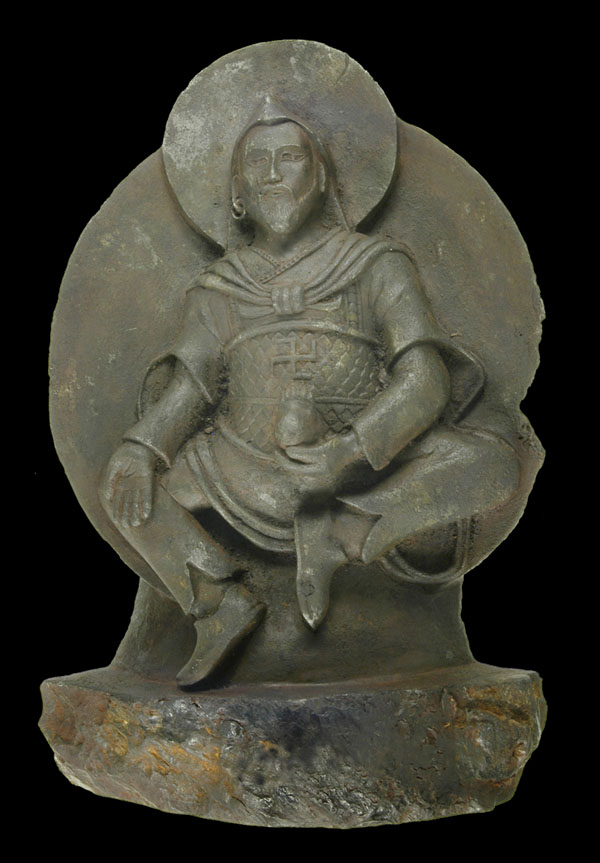
Out of this world: Buddhist statue made from meteorite

From: World Archeology

A 1,000-year-old Buddhist statue taken from Tibet by Nazi scientists is the first-known carving of a human figure made from a meteorite, newly-published research says.
With stylistic links to the 11th century Bön culture, the sculpture is thought to depict the Buddhist god Vaisravana.
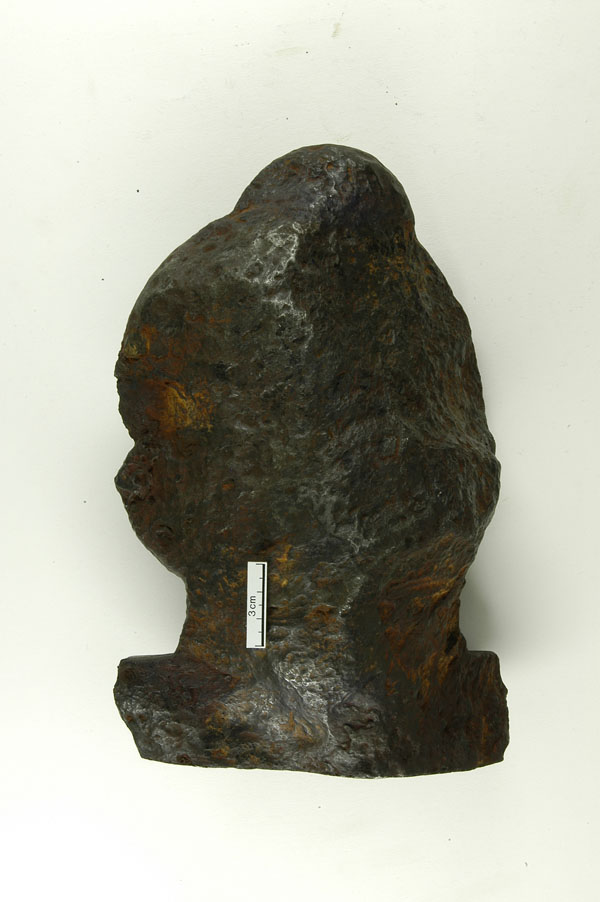
Despite measuring just 24cm in height, the object weighs 10kg (22lb). Now geochemical analysis by the University of Stuttgart, published in Meteoritics and Planetary Science, has revealed that the artefact is made of ataxite, a rare class of iron meteorite with a high nickel content.
‘The statue is the only known illustration of a human figure to be carved into a meteorite,’ said project-leader Dr Elmar Buchner, from the university’s Institute of Planetology. ’It was chiseled from a fragment of the Chinga meteorite which crashed into the border areas between Mongolia and Siberia about 15,000 years ago.’
He told CWA: ‘Stylistically, it is not absolutely typical for Buddhist or pre-Buddhist art, but during the 11th century there was a style of religious art in the Himalayan area, that can be described as a hybrid style between the two. It was called Bön culture, and this figure is typical of that style.
There are similar figurative illustrations of gods – and also of local dignitaries – from the 11th century, made from wood, stone or other material – but not of a meteorite!’
Called the ‘Iron Man’, the statue was brought to Germany by an SS-backed expedition investigating the origins of Aryanism in Tibet in 1938-1939. It is not known exactly how or where the statue was found, but the large swastika carved into the centre of the figure – an ancient symbol representing good fortune – may have encouraged the team to take it with them. After decades in a private collection, the artefact became available for study following an auction in 2009.
Meteorites have inspired veneration in a number of cultures, from Inuits in Greenland to the aboriginal peoples of Australia. The Black Stone in the Kaaba (the building circled by Muslim pilgrims during the Hajj) at Mecca is also believed to be a stony meteorite.

Thursday, 27 September 2012

Potala Palace hides sacred treasures

CCTV.com
09-26-2012 09:28 BJT

Watch Video

Play Video
By CCTV reporter Stanley Lee
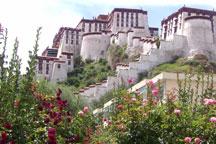
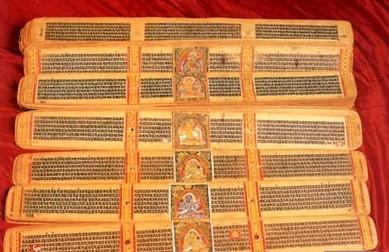
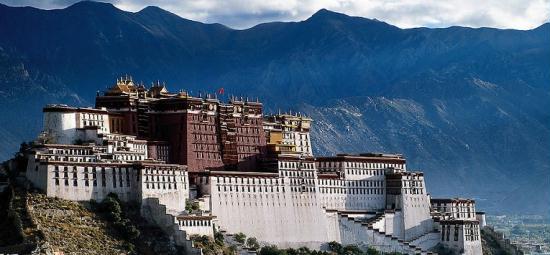
There is no better place to find pattra-leaf scriptures than at the Potala palace in Tibet. The palace holds the largest collection of the "Beiyejing". So let’s venture into its inner sanctum for a look at the hidden treasures.
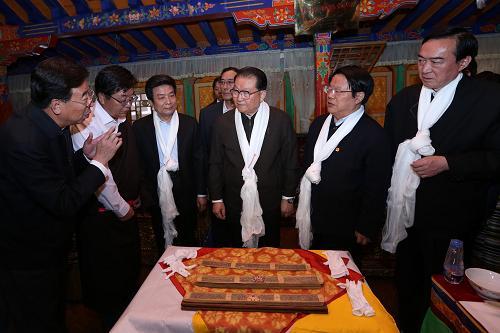
Layer upon layer of protection, finally we are about to get a glimpse of the ancient treasure locked away here.
All of the Scriptures written on pattra leaves are carefully preserved on these wooden shelves.
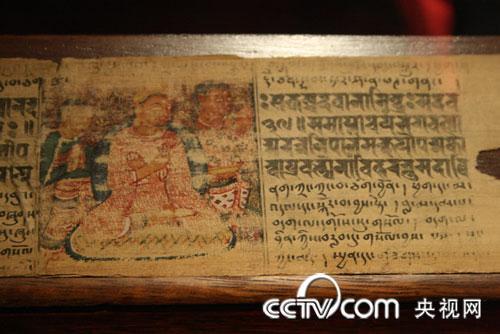
Puncog Tseten is an expert in "Beiyejing". He gently unfolds the multiple layers of wrapping and reveals to us the "Beiyejing" that’s at least 12 hundred years old, all 200 pages of them.
Phuntshogs Tseten, Artefact expert, said,"Here you can see holes on the side, we used strings to link them together so that they won’t scatter all over the place"
Tseten also says the paintings on the "Beiyejing" is about the Budda. There are also commentaries and stories about famous Buddist figures. It’s remarkable how the paintings and text have retained its sharpness after more than a millennia.
However the artefacts are need of being organized and classified as time has brought confusion on their order.
Phuntshogs Tseten said,"These page numbers are in Sanskrit, and these are in Tibetan. They are a bit misleading as they were written down later, usually we look at the Sanskrit numbers. "
The organizing project took a couple of years, every piece was extracted and carefully examined and catalogued. The experts also made photo copies of all of them so that the treasures will be available to researchers and academics.
There is no better place to find pattra-leaf scriptures than at the Potala palace in Tibet. The palace holds the largest collection of the "Beiyejing".
Potala Palace
Potala Palace


Norwegian professor studies" Beiyejing"

09-26-2012 09:58 BJT

Watch Video

Play Video
The pattra-leaf scriptures have recorded not only the scriptures of Buddhism but also philosophy, history, calendars, literature, art, science and so on. Therefore, studying the pattra-leaf scriptures demands a lot from a scholar. Now we head to Oslo, the capital of Norway, to meet an expert on "Beiyejing".
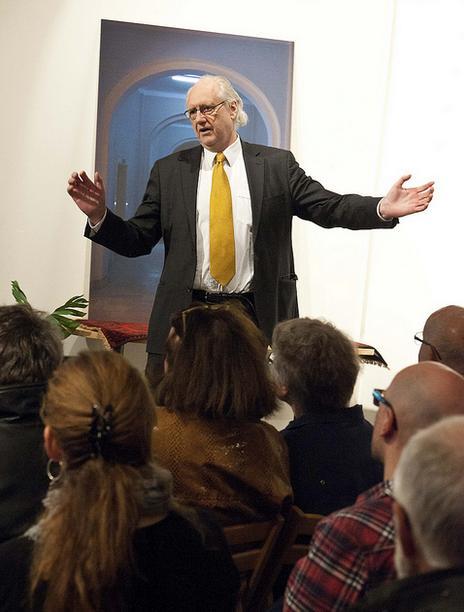
Professor Jens Erland Braarvig has dedicated his life to the study of the pattra-leaf scriptures. His main focus also includes languages, which helps him a lot in studying the pattra-leaf scriptures.
From the 2nd century to 8th century, many pattra-leaf scriptures were transported to countries in Central Asia from India on the ancient Silk Road. Professor Braarvig mainly studies those discovered in Afghanistan.
Professor Braarvig and his study team collected these pieces of "Beiyejing", scanned them into computers, categorized them, and then found their Sanskrit, Tibetan or Chinese version.
Professor Braarvig hopes that his team can cooperate with Chinese experts to study the pattra-leaf scriptures in the future, which he believes will help more people understand the history of Buddhism as well as the influence Buddhism has had on politics, language and culture.
Professor Jens Erland Braarvig

Tuesday, 25 September 2012

Weatherwatch: Climate helped Genghis Khan create the Mongol empire


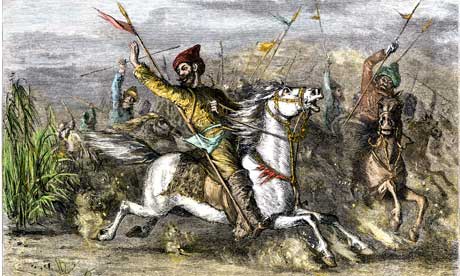
Genghis Khan leading the Mongol conquest of China
Lush grasslands helped Genghis Khan fuel his armies in their conquest of Asia and parts of Europe. Photograph: North Wind Picture Archives /Alamy
The Mongol empire in the 13th century conquered great swaths of Asia, the Middle East and even parts of Europe at staggering speed, but how did Genghis Khan and his armies manage to conquer so much and so fast? The answer may lie in some ancient dead trees found recently in an old volcanic lava flow in Mongolia. The trees were so well preserved that their annual growth rings were still visible and gave an astonishing insight into the climate of the 1200s. The wood rings were spaced wide apart showing that the trees grew well, thanks to plenty of rain. And because the trees did well, the chances are that the grasslands of the vast Mongolian plains also grew lush in the wet climate. Those rich grasslands would have fuelled the Mongol armies, giving plenty of grazing land for the thousands of horses that the troops relied on, and livestock to feed the soldiers.
But the tree rings also showed a sudden lurch into much colder, drier conditions around 1258, when the trees hardly grew. This was around the time the Mongol empire began to fall apart and the Mongols moved their capital into what is now Beijing. It was part of a global climate event, and a recent archaeological dig in London revealed that a catastrophicfamine struck England at the same time, leading to thousands of deaths. The downturn in climate was caused by a massive volcanic eruption that blanketed the globe in ash and cut down sunlight across the world.